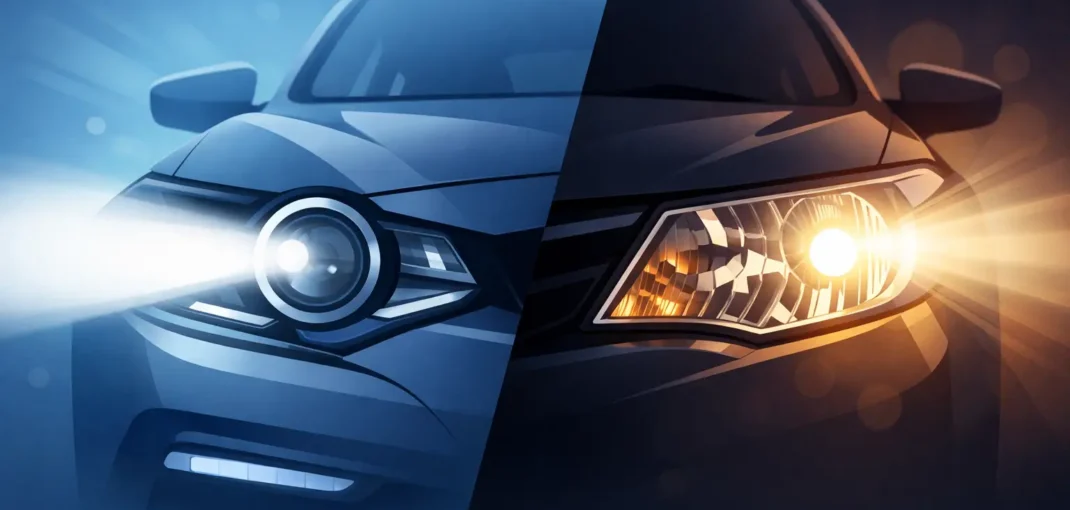
A cloudy lens or weak factory beam can make a familiar night drive feel longer than it should. When shopping for a replacement or an LED-style upgrade, the projector versus reflector headlights decision affects more than the front-end look of your truck, SUV, or car. It determines where light lands, how clean the beam pattern appears, which bulbs work correctly, and how much attention the installation requires.
For many owners, the right answer is not simply whichever option looks brighter in a product photo. Your vehicle application, driving conditions, housing design, and local lighting requirements all matter. Start with the beam pattern you need, then choose a direct-fit headlight assembly built for your year, make, and model.
Projector Versus Reflector Headlights: The Main Difference
Reflector headlights use a bowl-shaped, reflective housing behind the bulb. The interior surface gathers the bulb’s light and directs it forward through the lens. It is a straightforward design used on countless factory vehicles, from older work trucks to many modern daily drivers.
Projector headlights place the light source inside a compact housing with a curved reflector, a cutoff shield, and a front lens. The lens projects a more focused beam onto the road. That cutoff shield is the feature most drivers notice at night: it creates a sharper upper edge in the low-beam pattern, helping keep light below the sightline of approaching traffic when the headlights are aimed correctly.
Neither housing type is automatically better in every situation. A quality reflector assembly with the correct bulb can provide strong, useful road coverage. A poorly built projector housing or an incorrectly matched LED bulb can create disappointing output despite its aggressive appearance.
How Reflector Headlights Work
A reflector housing is designed around the exact position and shape of its original bulb filament or light source. Light bounces off the reflective interior and spreads out in a broad pattern. This can produce excellent side-to-side coverage, which is useful on neighborhood roads, job sites, and rural routes where deer, driveways, and road edges deserve as much attention as the lane ahead.
Reflector assemblies are often the practical choice for owners replacing damaged, faded, or moisture-filled factory headlights. They are usually less complex, widely available, and easier to service. For an older Chevrolet Silverado, GMC Sierra, Ford truck, Tahoe, Yukon, or Mustang, a direct-fit reflector-style replacement can refresh nighttime visibility and restore the original front-end profile without changing the vehicle’s lighting design.
The trade-off is beam control. Because reflector optics send light across a larger area, the pattern may have a softer cutoff than a projector. Bulb choice becomes especially important. Installing an LED bulb designed with the wrong emitter position, or a high-output bulb that does not match the housing, can scatter light upward instead of putting it on the pavement. More glare is not more usable visibility.
Best Uses for Reflector Housings
Reflector headlights make sense when you want a factory-style replacement, broad light distribution, simple serviceability, or a cost-conscious upgrade. They can also be a solid option when an aftermarket assembly is engineered specifically for LED use rather than simply using an LED bulb in a halogen housing.
Look closely at whether the assembly includes bulbs, requires separate bulbs, or is built with integrated LED lighting. Those details affect the final cost and installation plan.
How Projector Headlights Work
Projector headlights concentrate light through a lens, creating a controlled pattern that is typically more precise than a conventional reflector setup. On low beam, the internal shield forms a defined cutoff. On many projector high-beam systems, the shield moves or a separate high-beam source activates to send more light farther down the road.
This design is popular with drivers who want a modern appearance and controlled forward lighting. Black housings, clear lenses, LED daytime running light accents, halos, and smoked styling are frequently paired with projector designs because the compact lens creates a clean, updated look. For trucks and SUVs with a tall front end, a properly aimed projector beam can help focus light where it is needed instead of throwing excess light high into the distance.
Projector assemblies are not automatically brighter. Brightness depends on the housing optics, bulb type, electrical system, lens clarity, and aim. A quality projector built around LEDs can offer a crisp, effective beam. A projector intended for a halogen bulb may not perform well with a random LED conversion bulb, even if that bulb claims a very high lumen number on the box.
Best Uses for Projector Housings
Choose projectors when you want a more defined low-beam cutoff, a modern front-end upgrade, or a lighting package designed around LED technology. They are especially appealing for owners replacing factory assemblies while changing the vehicle’s visual style at the same time.
Before ordering, confirm whether the product uses projector low beams, projector high beams, LED running lights, halogen bulbs, or an integrated LED setup. A headlight assembly can include more than one lighting function, and each may have different service requirements.
Beam Pattern Matters More Than Claimed Lumens
The best headlight is the one that puts useful light on the road without causing unnecessary glare. This is why beam pattern should rank above marketing claims about wattage or lumen output.
A clean low-beam pattern lights the lane, road markings, and shoulder while keeping the upper portion controlled. Projectors generally have an advantage in cutoff sharpness. Reflectors can provide generous width, but they need a correctly designed bulb and housing to keep the pattern under control.
If you drive mostly on dark two-lane roads, look for strong forward reach and shoulder coverage. If your truck spends more time in city traffic, consistent low-beam control and a reliable daytime running light setup may matter more. Drivers who tow, haul, or run larger tires should also check headlight aim after suspension changes or added weight. Even an excellent assembly performs poorly when it points too high or too low.
LED Bulbs and Headlight Housing Compatibility
LED upgrades are popular because they can provide a whiter light color, fast illumination, and a modern look. But the bulb and housing must work together. This is where many projector versus reflector headlight problems begin.
A halogen reflector housing was designed around a filament that emits light from a very specific location. An LED bulb has chips instead of a filament. If those chips do not sit in the same effective position, the reflector cannot direct light as intended. The result may be dark spots, scattered light, reduced distance, or glare for oncoming drivers.
Projector housings can have the same issue. Some projectors accept LED replacement bulbs well, while others are optimized for halogen or HID sources. The safest route is an assembly advertised for the lighting source you plan to use. If you are replacing the full headlight unit, an LED-ready or integrated LED assembly removes much of the guesswork.
Also consider vehicle electronics. Some newer applications may need a compatible harness, resistor, decoder, or anti-flicker module to prevent warning lights, flicker, or inconsistent operation. Check the product details before installation instead of assuming every bulb is plug-and-play.
Fitment, Installation, and Road-Ready Setup
Vehicle-specific fitment is the fastest way to avoid a frustrating headlight upgrade. A housing may look nearly identical across several model years while using different mounting tabs, connectors, bulb sizes, or leveling features. Select your exact year, make, model, trim, and relevant body style before comparing options.
For pickup owners, this is especially important around generation changes. A headlight listed for one Silverado or F-Series range may not fit a similar-looking truck from the next generation. The same applies to Tahoe, Yukon, Sierra, and Mustang applications, where grille shape, wiring, and factory lighting packages can change within a body style.
Installation usually involves removing trim panels, grille components, fasteners, and electrical connectors. Keep the original hardware organized, inspect connectors for corrosion, and make sure rear dust caps and seals are installed correctly. Moisture inside a new assembly can shorten bulb life and reduce lens clarity.
After installation, aim the headlights on level ground. Park facing a flat wall, verify the vehicle has normal tire pressure and typical fuel load, then follow the assembly or vehicle specifications for adjustment. Do not judge aim only from the driver seat. A beam that looks high and bright from behind the wheel may be glaring everyone in the opposite lane.
Which Headlight Style Is Right for Your Vehicle?
Choose reflector headlights if you want an economical factory-style replacement, broad coverage, and straightforward service. They are a dependable option when matched with the correct bulb and a quality direct-fit housing.
Choose projector headlights if you want a more focused beam pattern, a sharper low-beam cutoff, and a modern custom look. They are a strong choice for LED-focused upgrades, provided the assembly is built for the light source and fits your vehicle correctly.
For either style, skip the one-size-fits-all approach. Car and Truck Zone makes it easier to shop by vehicle application, then compare housing color, lens style, bulb technology, and included components before you buy. The goal is not just a brighter-looking front end. It is a headlight setup that fits cleanly, works reliably, and gives you confidence on the next dark road home.