
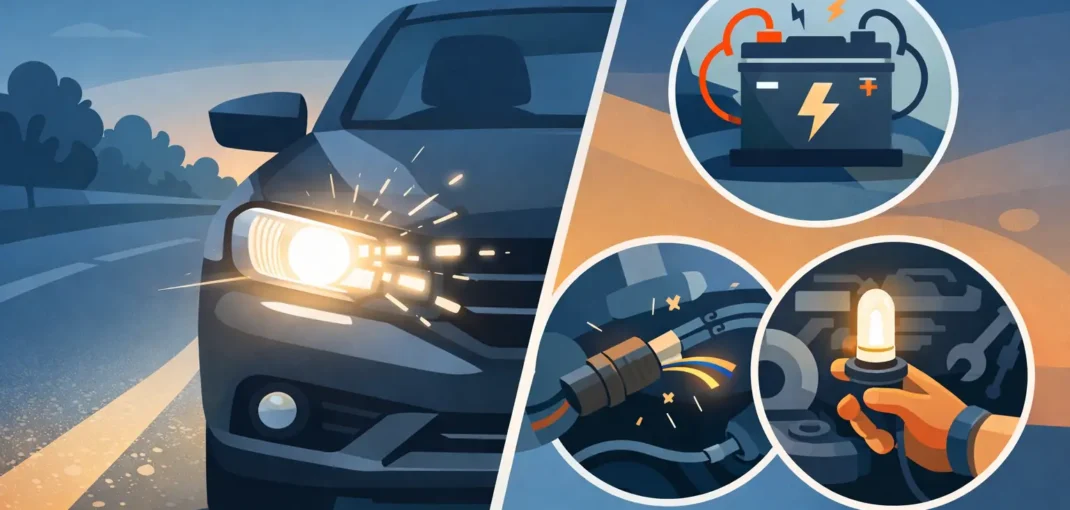
A steady headlight beam is something most drivers do not think about until it starts pulsing on a dark road, dimming at a stoplight, or flashing over bumps. So, why do headlights flicker? The answer can be as simple as a loose bulb connection or as serious as a charging-system problem. Finding the cause early protects nighttime visibility and can keep a small electrical repair from becoming a no-start situation.
Flickering can happen with factory halogen bulbs, replacement LED headlights, projector housings, fog lights, and auxiliary truck lighting. The pattern matters. Lights that flicker only while idling point in a different direction than lights that blink when you hit a pothole or turn on the A/C.
Why Do Headlights Flicker While Driving?
Headlights need stable voltage and a solid ground to operate correctly. When either one changes unexpectedly, the light output changes with it. A brief flicker once in a while may be hard to trace, but frequent flickering, repeated dimming, or a beam that changes color should be checked before regular night driving.
A Weak Battery Can Cause Voltage Drops
A battery does more than start the engine. It helps stabilize electrical voltage when accessories are running and when engine speed is low. As a battery ages, loses charge, or develops an internal issue, it may not support the electrical system consistently. You may notice headlights dimming at idle, especially with the blower motor, heated seats, rear defroster, or aftermarket audio system switched on.
Look for slow cranking, a battery warning light, corroded terminals, or headlights that brighten noticeably when you raise engine RPM. Clean, tight battery terminals are a good first check. If the battery is more than a few years old or has been discharged repeatedly, have it load-tested rather than guessing.
A Failing Alternator May Not Maintain a Steady Charge
The alternator supplies power after the engine starts and recharges the battery. When its voltage regulator, internal diodes, belt, or wiring begins to fail, headlights may pulse from bright to dim as the charging output changes. This is one of the more common answers when headlights flicker at idle but improve somewhat while cruising.
An alternator problem can also bring other symptoms: a battery warning light, dim dashboard illumination, erratic power windows, a whining noise through the speakers, or a battery that keeps going dead. Do not assume every flicker means the alternator is bad. A multimeter test or charging-system test gives a more reliable answer. Most running vehicles should show a stable charging voltage in the general 13.5 to 14.8-volt range, though specifications vary by vehicle and smart charging systems can operate differently.
Loose or Corroded Wiring Interrupts Power
A loose headlight connector, damaged wire, weak ground, or corrosion inside a socket can interrupt current just long enough to make the bulb flicker. This issue is especially likely if one headlight flickers while the other remains steady. It is also common on vehicles that see road salt, water crossings, heavy rain, off-road use, or years of underhood heat.
Inspect the back of the headlight housing and the wiring leading to it. Look for melted plastic, green or white corrosion, brittle insulation, loose terminals, and signs that the connector has overheated. A darkened or melted bulb socket should be replaced, not taped up and ignored. Heat damage creates resistance, and resistance can cause more heat.
Ground connections deserve the same attention. Headlight circuits rely on clean metal-to-metal grounding points. A loose ground bolt or corrosion beneath a ground terminal can create inconsistent operation that looks like a bad bulb. On trucks with added light bars, cab lights, or other accessories, poor grounding from a previous installation can affect more than the new equipment.
Bulb and Headlight Housing Problems
A worn halogen bulb can flicker near the end of its service life. The filament inside the bulb becomes fragile over time, and vibration can cause intermittent contact. If the flicker appears after driving over rough pavement or closing the hood, inspect the bulb and its connection first.
Halogen bulbs should usually be replaced in pairs. Even if only one side is flickering, the other bulb has experienced the same age and operating hours. Replacing both keeps color and brightness more consistent across the front of the vehicle.
Moisture inside the housing is another concern. Light condensation may clear after the lights warm up, but standing water, repeated fogging, or water marks inside the lens indicate a failed seal, crack, damaged vent, or loose rear cap. Moisture can corrode terminals and damage bulbs, LED boards, and internal reflectors. If the housing is cracked or heavily clouded, a direct-fit replacement headlight assembly may be the better repair than repeatedly replacing bulbs.
LED Headlights Can Flicker for Different Reasons
LED upgrades use less power than halogen bulbs, but they are not automatically plug-and-play on every vehicle. Some factory systems monitor bulb resistance. Because LEDs draw less current, the vehicle may interpret them as a failed bulb and send pulses through the circuit. The result can be flickering, flashing, hyperflash behavior, or a dashboard bulb-out warning.
A compatible LED anti-flicker harness, decoder, or load resistor may correct the issue, depending on the vehicle and headlight design. The trade-off is that resistors produce heat and must be mounted safely away from plastic components, wiring insulation, and anything that can melt. They are not a universal fix for a damaged socket, weak alternator, or bad ground.
LED flickering can also come from an incompatible driver, a poor-quality bulb assembly, or an installation problem. Check that the bulb is fully seated, the connector is locked, and the driver is secured away from moving parts and extreme heat. Select LED headlights listed for your exact year, make, model, and trim whenever possible. A vehicle-specific setup reduces fitment surprises and helps preserve the beam pattern designed for your housing.
Use the Flicker Pattern to Narrow Down the Cause
The way the lights behave can save time during diagnosis. If both headlights dim together when the engine is idling, suspect the battery, alternator, battery cables, or a main ground. If one side flickers over bumps, focus on that bulb, socket, harness, and housing. If flickering began immediately after an LED conversion, check compatibility, polarity, decoder requirements, and connector fit.
If headlights pulse when you use another accessory, such as power steering at low speed, the HVAC blower, or a winch, the vehicle may be dealing with a temporary electrical load. A healthy charging system should handle normal factory accessories. Added high-draw equipment may require proper relays, fused wiring, adequate wire gauge, and, in some builds, charging-system upgrades.
For older pickups and project vehicles, previous repairs are often part of the story. Splice connectors, non-fused accessory wiring, aged grounds, and modified headlight circuits can all create voltage loss. Trace changes made before the issue started rather than replacing parts at random.
A Practical Headlight Flicker Check
Start with the simple checks while the vehicle is off. Make sure the battery terminals are clean and tight, then inspect the headlight bulbs, connectors, housings, and visible wiring. Do not touch the glass of a halogen bulb with bare fingers, since oils can shorten bulb life.
Next, start the vehicle and watch the lights at idle. Turn on normal electrical loads one at a time and look for major changes in brightness. If you have a multimeter and are comfortable using one, check battery voltage with the engine off and charging voltage with it running. Unstable readings, a low charging reading, or excessive swings point toward a system-level issue.
Avoid unplugging the battery while the engine is running to test the alternator. That old shortcut can damage sensitive electronics. If you find melted connectors, exposed wire, a battery warning light, or charging voltage that is clearly unstable, schedule a professional electrical diagnosis.
Replace the Right Part for Your Vehicle
The right repair depends on what failed. A bad bulb calls for a matched replacement pair. A burned socket needs a new socket or repair harness. A leaking housing may need a complete assembly. Charging-system problems require battery, alternator, cable, belt, or ground repairs based on actual test results.
When replacing headlights, prioritize exact fitment, connector style, bulb technology, and housing design for your vehicle. Car and Truck Zone makes it easier to shop replacement and upgrade lighting by vehicle application, whether you are refreshing worn factory lights or moving to a cleaner LED look.
A flickering headlight is not just an appearance issue. Check it while the symptom is still occasional, choose components that match your vehicle, and get back to a clear, steady beam before the next night drive.