A lifted Silverado can look right with a set of round nerf bars, but that does not automatically make them the better choice for your daily drive. Nerf bars versus side steps is really a question of how you use your truck or SUV: climbing into the cab, protecting the rocker area, keeping your pants clear in muddy weather, or finishing the exterior with the look you want.
Both accessories mount below the doors and make entry easier. The difference is in the platform, profile, construction, and the amount of coverage they provide. Choosing the right direct-fit option starts with your vehicle’s cab configuration, ride height, and real-world use.
Nerf Bars Versus Side Steps: The Main Difference
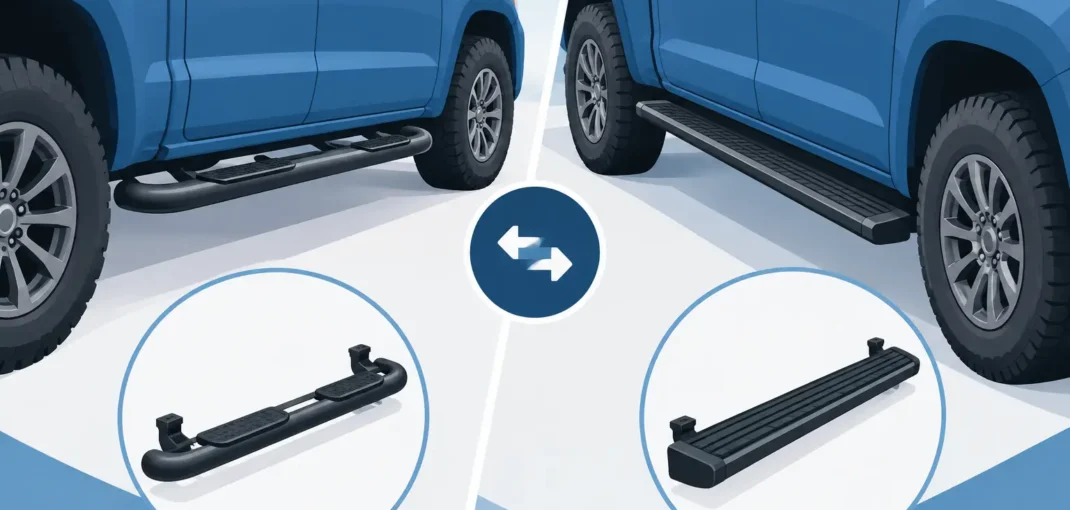
Nerf bars are usually tubular bars that run along the rocker panel area. They may be round, oval, or shaped with a more aggressive angular profile. Most include molded or textured step pads at each door position, giving passengers a defined place to step while keeping the accessory’s profile relatively tight to the body.
Side steps, often called running boards, generally provide a wider and flatter stepping surface. They can run nearly the full length of the cab and may use a flat board design, contoured aluminum construction, or a wide molded composite platform. Their larger surface makes getting in and out easier, especially on lifted trucks and taller SUVs.
The best choice is not only about appearance. A narrow tube can preserve ground clearance and match an off-road build, while a full-width board can make a major difference for kids, older passengers, work crews, and anyone entering a tall cab several times a day.
Choose Nerf Bars for a Tighter, Sportier Profile
Nerf bars are a popular truck upgrade because they balance useful access with a clean exterior look. A black powder-coated round bar works especially well on trucks with black wheels, dark trim, smoked lighting, or an off-road-inspired build. Polished stainless options create a brighter, classic appearance on chrome-trimmed pickups and SUVs.
Their smaller diameter and tucked-in profile can be a better match when clearance matters. If you use uneven trails, drive through deep ruts, or simply do not want a wide board hanging below the rocker panels, nerf bars are often the more practical route. They can also be easier to keep clean because there is less flat surface for mud, road salt, and snow to collect.
That said, the narrower stepping area is a real trade-off. Small factory-style pads are enough for most adults, but they are not as forgiving as a wide running board when shoes are wet or when a passenger is climbing into a lifted truck. The location of the pads matters, too. On a crew cab, check that there is a usable pad aligned with every door you expect passengers to use.
When nerf bars make the most sense
Nerf bars are a strong fit for truck owners who want a more compact step accessory, an athletic look, and good rocker-area coverage without adding much visual bulk. They are especially useful on trucks that see light off-road use, or on standard-height pickups where the entry assist does not need to be extra wide.
Look closely at material and finish. Stainless steel helps resist corrosion and is a solid choice for wet or snowy climates. Powder-coated steel offers a durable blacked-out look, but chips should be addressed before bare metal has a chance to rust. Textured step pads are worth prioritizing if your truck sees rain, snow, job sites, or regular outdoor use.
Choose Side Steps for Better Everyday Access
Side steps give you a larger target underfoot. That extra width is the reason many family trucks, work trucks, and full-size SUVs use running-board-style steps. Instead of placing your foot on a narrow pad, you step onto a broad, stable platform that is easier to find when loading gear, helping a child into the rear seat, or climbing into a truck after a long day.
They also tend to provide more continuous coverage along the cab. A full-length board can help shield the lower body from rocks, splash, and debris kicked up by the front tires. It will not replace a true skid plate or heavy-duty rock slider, but it can reduce the direct hit your rocker-area paint takes during normal road driving.
The downside is that a wider step can sit lower and farther out from the body. That may reduce clearance on tight trails, and it can collect more dirt in bad weather. A side step also changes the truck’s silhouette more than a tucked-in tube bar. For some owners, that planted, finished look is exactly the goal. For others, it is too much.
When side steps are the better investment
Choose side steps when cab access is the priority. They are often the better answer for lifted pickups, heavy-duty trucks, full-size SUVs, and vehicles that regularly carry passengers. If you are shopping for a crew cab Silverado or Sierra, a Ford Super Duty, Tahoe, or Yukon, a wide board can make all four doors easier to use.
Pay attention to the surface design. Raised traction ribs, non-slip pads, and textured finishes help in rain and snow. Aluminum side steps can offer corrosion resistance with less weight, while steel versions may suit owners who prefer a heavier-duty feel. The right product should also place the board close enough to the cab for a natural step, without sitting so high that it offers little real help.
Compare Fitment Before Finish
Finish gets attention first, but fitment should decide the purchase. A step accessory made for a regular cab will not correctly fit an extended cab or crew cab version of the same truck. Bed length is not always the deciding factor, but cab style, wheelbase, rocker-panel shape, factory mounting points, and model year can all affect compatibility.
Start by confirming the year, make, model, and cab configuration. Then verify whether the product is designed for your specific application, including two-door versus four-door layouts. Direct-fit mounting brackets and vehicle-specific hardware make installation more straightforward and help the bars or steps sit in the intended location beneath the doors.
Do not assume a universal set will deliver the same result. Universal accessories can require drilling, extra fabrication, or compromised placement. Vehicle-specific nerf bars and side steps are typically the better choice for appearance, secure mounting, and predictable door-to-step alignment.
Think About Installation and Maintenance
Most bolt-on nerf bars and side steps are manageable for a capable DIY installer with common hand tools. Installation time varies by vehicle and product design, but clean factory mounting locations and included brackets simplify the job. Before tightening hardware, loosely install the brackets and accessory first. This gives you room to align the bars or boards evenly with the cab.
After installation, check that doors open freely and that the step sits level. Recheck mounting hardware after the first few drives, particularly if you use the truck on rough roads. A little routine attention helps prevent rattles and keeps the accessory securely mounted.
Maintenance is simple but worthwhile. Rinse away road salt and packed mud, especially around brackets and mounting points. Check black finishes for chips, inspect step pads for wear, and make sure traction surfaces stay free of slippery buildup. Stainless steel still benefits from regular cleaning, particularly in areas where winter road treatment is common.
Match the Step to Your Truck’s Build
For a blacked-out street truck, oval black nerf bars can complement dark grilles, LED lighting, and smoked exterior details without overwhelming the body lines. For a chrome-accented pickup, polished stainless bars may tie in with factory bumpers, wheels, and trim. For a work-focused or family-focused truck, wide black running boards often deliver the most usable access while still creating a finished look.
Think beyond the parked-truck photo. A narrow nerf bar may be exactly what you want until a child has to climb into the rear seat in the rain. A wide side step may be ideal for passengers but less appealing if you frequently drive narrow trails. There is no single winner because the better accessory is the one that supports how your vehicle is used.
At Car and Truck Zone, selecting your vehicle first helps narrow the search to accessories built for your truck or SUV. Confirm your cab style, compare the step width and finish, and choose a direct-fit design that looks right every time you walk up to the vehicle and works right every time you climb in.