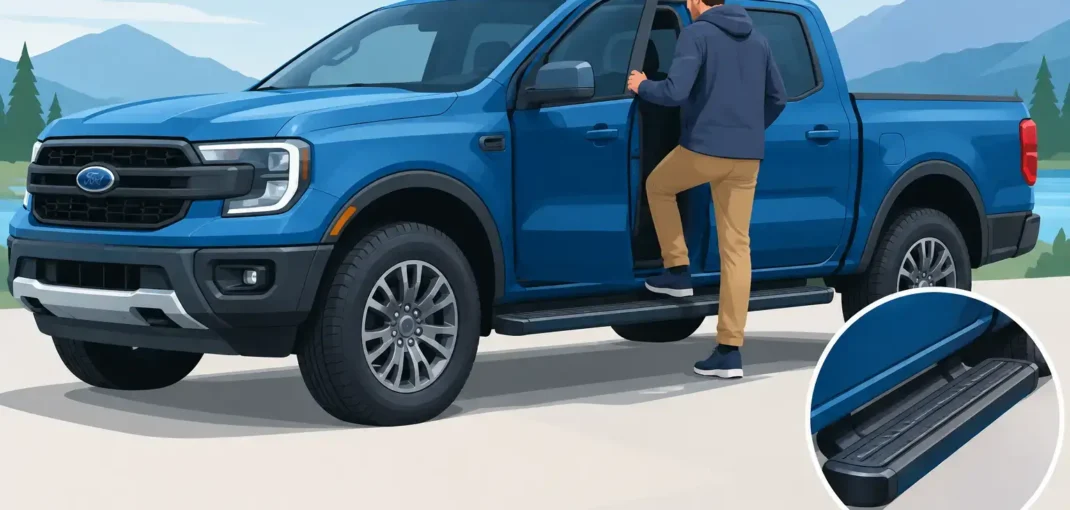
A Ford Ranger can sit just high enough to make getting in and out feel awkward, especially with a lift, larger tires, kids climbing into the cab, or a loaded truck at the end of the day. The right step accessory fixes that problem while adding a finished, truck-ready look. This Ford Ranger running board guide breaks down what to check before you buy, from exact fitment and step width to finish, ground clearance, and everyday use.
Start With Ford Ranger Fitment
Running boards are not one-size-fits-all truck parts. Your Ranger’s model year, cab configuration, bed length, and factory mounting locations determine which boards will install correctly. A board made for a SuperCrew Ranger may not fit a SuperCab, even if both trucks are from the same generation.
Before comparing finishes or styles, confirm your exact year, make, model, and cab. Ford Ranger applications commonly vary between older trucks and newer body styles, and the mounting hardware, rocker-panel contours, and wheelbase can change with the generation. Selecting your vehicle first helps narrow the choices to products designed around the correct mounting points.
Also pay attention to the listed cab application. A SuperCab has smaller rear doors and a different cab length than a SuperCrew. Installing a step that is too short leaves passengers without support. One that is too long can look out of place or interfere with the rear wheel opening. Vehicle-specific running boards should follow the cab body line and provide usable access at every door.
Ford Ranger Running Board Guide to Step Styles
The best style depends on how you use your Ranger. Some owners need a wide, stable platform for daily entry. Others want a tighter-profile bar that preserves clearance on trails or rough job sites. Both can be the right choice.
Full-Length Running Boards
Traditional running boards use a broad, flat stepping surface that extends along the side of the cab. They are a strong choice for families, work trucks, and anyone who wants the easiest possible step into the vehicle. The wider platform is especially helpful for children, older passengers, and people wearing work boots.
Many boards include textured step pads, molded traction strips, or raised patterns to improve footing in rain, snow, and mud. Look for a board with a surface wide enough to use confidently without sticking out so far that it becomes the first point of contact with obstacles.
Full-length boards also create a clean, factory-style appearance. If your goal is to make the Ranger feel more finished without giving it an overly aggressive build, this is usually the most natural fit.
Nerf Bars and Round Step Bars
Nerf bars use a tubular design, often with one or more molded step pads at the doors. Their compact profile appeals to owners who want straightforward cab access and a classic truck accessory look. Round bars, oval bars, and larger-diameter tubes can each change the visual style and usable step area.
A round bar generally sits closer to the rocker panel and may offer slightly better clearance than a wide board. The trade-off is less foot room. If you regularly climb in wearing heavy boots or your Ranger serves as the family vehicle, a larger oval bar or running board may be more comfortable.
Hoop Steps and Drop Steps
Hoop-style steps place a distinct step below each door. They create a bold off-road look and can be useful on Rangers with suspension lifts or oversized tires because the step hangs lower where you need it most.
That lower position is also the compromise. A drop step can reduce breakover clearance along the truck’s sides and may collect more mud, snow, or trail debris. It is a practical option for lifted daily drivers, but owners who run narrow trails or uneven terrain should consider a high-clearance bar instead.
Retractable Power Steps
Power running boards extend when the door opens and retract when the door closes. They offer excellent access while maintaining a cleaner side profile and maximum clearance when parked or driving.
They also cost more and add electrical components that need proper installation and occasional maintenance. For a Ranger used primarily on pavement, the convenience can be worth it. For a truck that sees frequent deep mud, water crossings, or harsh winter conditions, a fixed board with fewer moving parts may be the simpler long-term choice.
Choose a Finish That Matches the Truck
Finish affects more than appearance. It influences corrosion resistance, how easily the accessory cleans up, and how well it matches your Ranger’s other exterior upgrades.
Black powder-coated running boards are a popular choice for Rangers with black wheels, dark trim, smoked lighting, or a blacked-out grille. The finish creates a rugged, low-gloss look and can help resist chips and surface corrosion. It still needs routine washing, particularly in areas with road salt.
Polished stainless steel or chrome-style finishes bring a brighter, traditional truck look. They pair well with chrome bumpers, mirror caps, and grille accents. Stainless steel is a smart material to consider for wet climates because of its natural corrosion resistance, though the finish will show water spots and grime more quickly than textured black.
Textured black boards are often the most forgiving choice for work trucks. They hide dirt better, provide a tougher visual style, and work with nearly any Ranger paint color. If you use your truck for hauling, job sites, camping, or weekend trail runs, that easy-care finish makes a lot of sense.
Check Ground Clearance and Door Clearance
A running board should make entry easier without creating new problems. Review product photos and fitment notes to see how far the board extends from the rocker panel and how low it hangs below the cab.
A board that sits close to the body protects clearance and gives the truck a tucked-in appearance. A lower board is easier to reach, which matters more on lifted Rangers. Think about who uses the truck most. A driver who can climb into a lifted Ranger without trouble may still need a lower, wider step for passengers.
Door clearance is another point to verify. Properly designed vehicle-specific boards mount below the door path and should not interfere with opening or closing. Avoid universal products that require drilling, custom brackets, or guesswork unless you are prepared to modify the truck. A direct-fit application is usually faster to install and produces a cleaner result.
Installation: What to Expect
Most bolt-on Ford Ranger running boards attach to existing factory mounting points under the cab. This is a major advantage for DIY owners because installation usually does not require drilling into the body. The basic process involves positioning the brackets, tightening the hardware to the specified locations, attaching the boards or bars, and checking alignment before final torque.
Have a second person available for wider boards. They are manageable, but holding a long, heavy accessory in place while lining up brackets is easier with help. Basic hand tools are often enough, although a torque wrench is the best way to finish the job correctly.
Before installation, inspect the mounting areas for packed dirt, rust, or damaged threads. Clean the points first, and follow the hardware instructions rather than substituting bolts from the garage. After a short drive, recheck the fasteners. This is especially worthwhile after towing, off-road use, or the first few weeks of daily driving.
Power steps require additional planning because they may need wiring, motors, sensors, and a control module. If electrical accessories are outside your comfort zone, professional installation can be a sensible investment.
Do You Need Running Boards or Nerf Bars?
Choose running boards when access is the priority. Their wider platform is better for frequent passengers, families, work boots, and lifted trucks that need a dependable step. Choose nerf bars when you prefer a narrower profile, a classic tubular style, or slightly more side clearance.
Neither option is automatically better. A low-stock Ranger used as a commuter may only need slim bars for occasional support. A lifted SuperCrew that carries kids, coworkers, or gear-hauling passengers will benefit more from a full-length board or drop-step design.
Consider your other upgrades, too. Black running boards complement LED lighting, dark grilles, and aggressive wheel setups. A polished bar can match a more traditional chrome exterior. The best accessory should look like it belongs on your specific truck, not like an afterthought.
Shop With the Details That Matter
When comparing Ford Ranger step accessories, focus on the details that affect the install and daily experience: model-year fitment, cab type, mounting method, step width, surface traction, finish, material, and clearance. Product photos are useful, but the application listing is what confirms whether the part belongs on your truck.
Car and Truck Zone makes it easier to compare vehicle-specific running boards and nerf bars alongside other Ranger exterior upgrades. Select your vehicle, confirm the cab configuration, and choose a step style that fits the way you actually use the truck. A well-matched set of boards should make every entry easier while giving your Ranger the finished look it deserves.