A lifted Silverado looks better when it is easy to get into. The same goes for a work-ready Ford F-150, a family Tahoe, or a heavy-duty GMC Sierra that sees daily use. Choosing bolt on running boards comes down to more than picking a finish you like. The right set needs to match your exact vehicle, provide a stable step, hold up to weather and road debris, and install without turning a weekend upgrade into a fabrication project.
Bolt-on boards are a popular choice because they add practical access and a finished side profile without permanent modifications to the truck or SUV. Still, “bolt-on” does not mean every board fits every application. Start with your vehicle details, then compare the features that matter for how you drive.
Start With Exact Vehicle Fitment
The first filter should always be year, make, model, cab style, and bed length when applicable. A running board designed for a 2019-2024 Chevrolet Silverado 1500 Crew Cab may not fit a Double Cab, and it will not automatically fit a Silverado HD. The mounting locations, rocker-panel length, and bracket layout can all change between body styles.
For SUVs, check wheelbase and trim-specific fitment. A Tahoe, Suburban, Yukon, and Yukon XL may share styling cues, but the longer models require boards made for their extended wheelbase. Do not rely on product photos alone. A board can look correct in a listing image while being too short, too long, or equipped with the wrong mounting brackets for your vehicle.
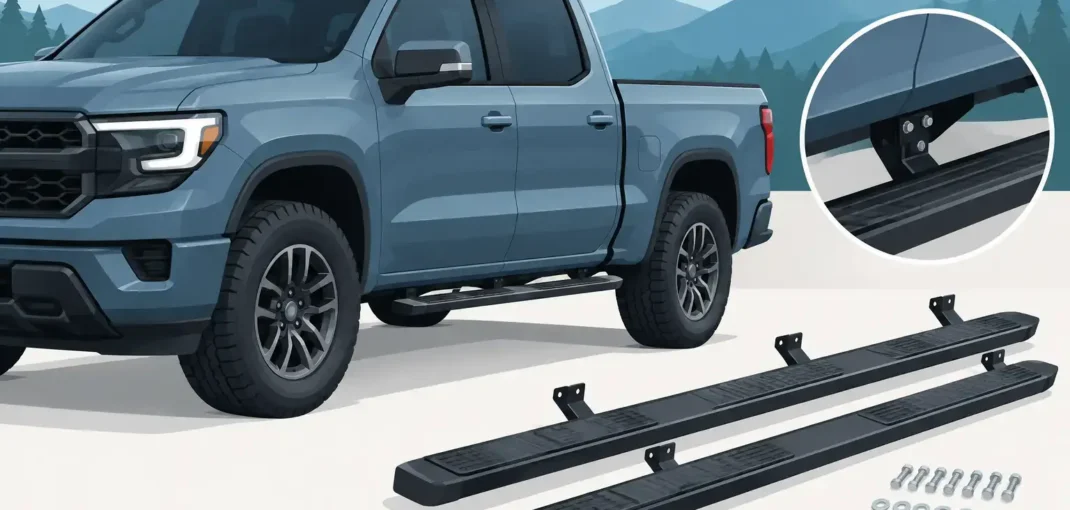
Vehicle-specific bolt-on running boards use factory mounting points whenever possible. That means less drilling, cleaner installation, and easier removal later if needed. Before ordering, confirm the product application and make sure the package includes the brackets and hardware required for your vehicle. At Car and Truck Zone, using year-make-model fitment is the fastest way to narrow the options to parts built for your truck or SUV.
Choosing Bolt On Running Boards by Use
A running board is not just a styling accessory. It is the part you and your passengers will step on in rain, snow, mud, work boots, and parking lots. Think about who uses the vehicle and how high the entry point sits.
Daily drivers and family SUVs
For a daily-driven SUV or truck carrying kids, passengers, or older family members, prioritize a wide, full-length stepping surface. A board around five to six inches wide gives passengers more confidence than a narrow tube-style step. Look for textured tread, raised ribs, or molded step pads that help shoes grip the surface when wet.
Full-length boards also make sense when rear-seat access matters. On a crew cab truck, a short cab-length step may leave rear passengers reaching for a less stable area. A properly sized board gives every door a usable step.
Work trucks and lifted pickups
If your truck sits higher than stock, step placement matters as much as width. A board mounted lower can reduce the first step up, but it may also reduce ground clearance. This is a practical trade-off. A lower board improves entry and exit, while a tighter, higher-mounted design is better for uneven job sites, rutted roads, and off-road use.
For work trucks, look for durable aluminum or steel construction, corrosion-resistant hardware, and a step surface that does not become slick with mud. If you regularly climb in and out wearing work boots, a wide board with aggressive traction is usually a better investment than a narrow round nerf bar.
Appearance-focused builds
If the main goal is a cleaner, more customized side profile, finish and board shape will lead the decision. Black powder-coated boards work well with black wheels, smoked lighting, dark grilles, and other blackout upgrades. Polished stainless steel creates a brighter classic truck look, while aluminum boards can offer a clean modern finish with less weight.
Keep usability in the equation. A sleek board that sits too close to the rocker panel may look sharp but offer little help on a lifted truck. The best setup supports the style of your build without making daily access harder.
Compare Board Width, Length, and Drop
Running board dimensions determine whether the upgrade feels useful after installation. Width affects foot placement. Length determines which doors receive coverage. Drop is the vertical distance between the body and the stepping surface.
A wider board offers the most secure footing, especially for families and trucks with larger tires or suspension lifts. Narrower steps take up less visual space and can preserve clearance, but they require more precise footing. This may be fine for an average-height stock truck, but it is less convenient for passengers climbing into a tall HD pickup.
Board length should match the cab configuration. Cab-length boards cover the passenger doors, while wheel-to-wheel boards extend toward the rear wheel and add a step for bed access. Wheel-to-wheel designs are especially useful on pickups with toolboxes, tonneau covers, or regular cargo loading. They are longer and more noticeable, so they can be more exposed to road debris and trail obstacles.
Pick a Material and Finish That Match Your Climate
The material affects weight, appearance, maintenance, and long-term durability. Aluminum running boards are lightweight and naturally resistant to rust, making them a strong choice for vehicles exposed to rain, road salt, and coastal air. Steel boards can provide a solid, heavy-duty feel, but they need a quality coating to resist corrosion over time.
Powder-coated black finishes are popular because they pair well with modern trucks and SUVs. They can hide dirt better than polished metal, although chips from rocks and road debris should be addressed before exposed steel begins to rust. Stainless steel is well suited to drivers who want a polished look and strong corrosion resistance, but it shows water spots and can require more frequent cleaning.
Also consider the tread material. Molded plastic pads and textured aluminum surfaces each have their place. Replaceable pads can be convenient on a high-use truck, while integrated textured surfaces create a cleaner appearance. For snowy or muddy conditions, choose traction over a smooth, show-truck finish.
Check Weight Capacity and Mounting Hardware
A set of running boards must support real use, not just look good in a driveway. Review the stated weight capacity, especially if the vehicle is lifted, regularly carries adult passengers, or sees job-site use. Capacity is influenced by the board material, bracket design, number of mounting points, and the vehicle’s factory attachment locations.
Pay attention to the hardware included with the kit. Quality bolt-on systems use vehicle-specific brackets that distribute weight correctly and align with factory holes. Hardware should be corrosion resistant, particularly in regions where roads are salted during winter. If a listing is unclear about brackets or installation hardware, verify what comes in the box before you order.
Do not assume an existing set of brackets will work with a different brand or style of board. Bracket geometry is often specific to both the vehicle and the running board design. Mixing components can create poor alignment, reduced ground clearance, or an unstable step.
Plan for Installation Before You Buy
Most bolt-on running boards are manageable for capable DIY installers with basic hand tools. You may need a socket set, ratchet, torque wrench, trim tool, and a second person to hold longer boards in position. The actual work is usually straightforward, but rust, dirt, and underbody coatings can make factory mounting points harder to access on older vehicles.
Read the installation requirements before placing the order. Some kits call for minor trimming or drilling on certain applications, while others are completely no-drill. Neither option is automatically better. A no-drill kit is convenient and easier to reverse, but a drilled installation may be necessary for particular body styles or heavy-duty designs.
After installation, tighten all hardware to the manufacturer’s recommended specifications and recheck it after the first few drives. Inspect the brackets periodically, especially after off-road use or winter driving. A loose bracket can create rattles, uneven loading, and premature wear.
Avoid the Common Buying Mistakes
The most common mistake is buying by appearance instead of fitment. Another is choosing a narrow step for a truck that needs a wide, low-access platform. It is also easy to focus only on the board price and overlook whether the kit includes the brackets, mounting hardware, and step pads needed for a complete installation.
Avoid selecting a finish without considering your local conditions. A polished board can look great on a weekend build, while a textured black aluminum board may be the better daily choice for wet, snowy, or muddy roads. If bed access is part of your routine, do not overlook wheel-to-wheel boards simply because cab-length boards cost less.
The right running boards should make every entry easier while matching the stance and purpose of your vehicle. Select your exact vehicle first, choose a step surface your passengers can use confidently, and pick a material that makes sense for where and how your truck works. A well-matched bolt-on set is one of those upgrades you notice every time you open the door.