A set of steps can change how your truck works every day. They make climbing into a lifted Silverado easier, give passengers a more secure foothold, and add a finished look along the rocker panels. But when you compare steel versus aluminum steps, the right choice is not simply about which material costs less. It comes down to how you use the vehicle, where you drive it, and the style and load capacity you expect from the upgrade.
Steel and aluminum are both common in running boards, nerf bars, hoop steps, and side steps. Each can be a solid choice when it is designed for your specific truck or SUV. The key is to look past the basic material label and consider construction, finish, mounting hardware, tread design, and vehicle-specific fitment.
Steel Versus Aluminum Steps: The Main Difference
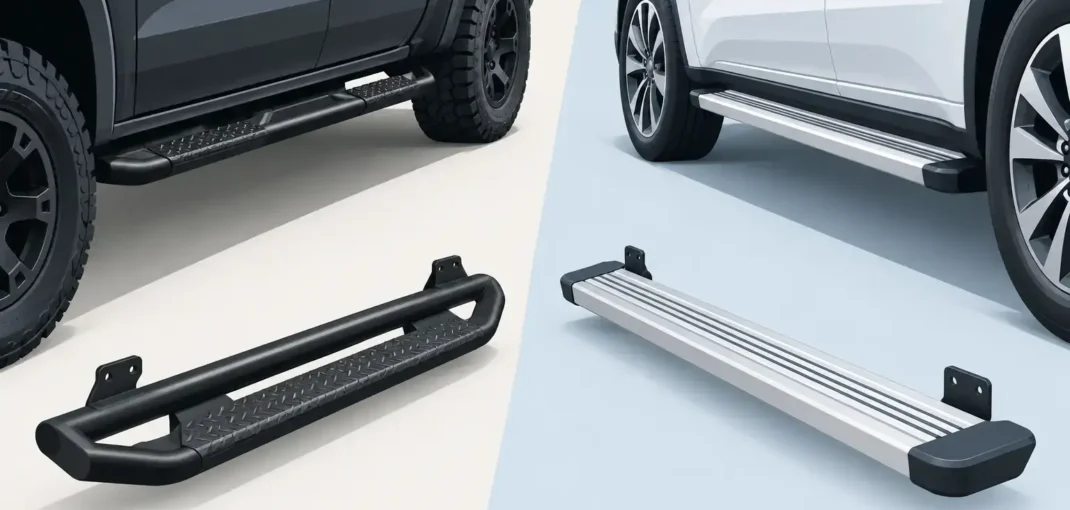
Steel steps are generally chosen for strength, a substantial feel, and aggressive truck styling. Aluminum steps are valued for lower weight and natural resistance to corrosion. Neither is automatically better for every application.
A heavy-duty work truck, off-road build, or full-size pickup that regularly carries people in and out may benefit from a stout steel nerf bar or running board. A daily-driven SUV, coastal vehicle, or truck where weight matters may be better matched with aluminum steps.
Keep in mind that “steel” and “aluminum” do not tell the whole story. Tube wall thickness, bracket design, weld quality, step-pad support, and finish can make a major difference in real-world durability. A well-built aluminum running board can be extremely capable, while a thin, poorly coated steel step can rust or flex earlier than expected.
Why Choose Steel Steps?
Steel is the traditional choice for many truck accessories because it handles hard use well and supports bold exterior designs. Powder-coated black steel, textured finishes, and larger-diameter round or oval tubes are especially popular on pickups with black wheels, aftermarket grilles, smoked lighting, and lifted suspensions.
Strength for frequent use
Steel has a reputation for toughness for a reason. It is commonly used in heavy-duty nerf bars, wheel-to-wheel running boards, and hitch-mounted steps. If your vehicle sees jobsite use, gets loaded with gear, or regularly helps passengers enter a tall cab, a quality steel step offers a planted, confidence-inspiring feel.
Steel is also a strong option for long wheelbase trucks where a wheel-to-wheel design is needed. These steps provide access to both the cab and the front of the bed, which is useful when reaching tools, cargo, or a fifth-wheel connection.
More style options for truck builds
From classic polished tubes to black powder-coated drop steps, steel gives manufacturers plenty of design flexibility. It is easy to find steel bars with wide hoops, angular steps, aggressive tread plates, and off-road-oriented profiles.
For owners building a dark, rugged look, black steel steps pair naturally with black grilles, black LED headlight housings, tinted taillights, and all-terrain tires. They add visual weight to the side of a full-size truck without looking out of place.
The trade-off: weight and corrosion
Steel weighs more than aluminum. The difference may not transform how a truck drives, but it matters if you are adding several accessories, carrying a lot of payload, or trying to keep a performance-oriented SUV or Mustang tow vehicle as light as possible.
The bigger concern is corrosion. Bare steel will rust, so the protective finish is critical. Powder coating, e-coating, and stainless hardware can help a steel step hold up against rain, mud, road salt, and winter slush. Still, chips from rocks and road debris should be touched up promptly. In snow-belt states, cleaning the underside of the step and mounting brackets after winter is a smart habit.
Why Choose Aluminum Steps?
Aluminum running boards and side steps are a practical upgrade for owners who want easier access without adding unnecessary weight. They are especially common on modern trucks and SUVs because they can support broad, full-length board designs with clean lines and wide stepping surfaces.
Lower weight without sacrificing daily utility
Aluminum is significantly lighter than steel. That makes installation more manageable, particularly with longer running boards, and reduces the overall accessory weight added to the vehicle.
For a daily driver, family SUV, or newer pickup used for commuting and weekend towing, aluminum steps often provide exactly what is needed: dependable entry, wide traction surfaces, and a factory-style appearance. The lower weight can also be appealing for owners who have already added bed covers, hitch equipment, lighting, recovery gear, or other accessories.
Better corrosion resistance
Aluminum does not rust like conventional steel. That makes it a strong choice for trucks driven through wet weather, coastal air, salted roads, and muddy conditions. Aluminum can oxidize over time, but its oxidation layer does not spread in the same way as steel rust.
This does not mean aluminum steps are maintenance-free. Hardware and steel mounting brackets can still corrode, and road grime can collect around mounting points. Regular cleaning and checking fasteners remain worthwhile, especially after off-road trips or winter driving.
The trade-off: dents and design limitations
Aluminum can be more resistant to corrosion, but it is not invincible. A hard strike from a rock, curb, or trail obstacle may dent or gouge an aluminum board. Steel can also dent, of course, but it is often the preferred material for owners who expect their side steps to take repeated abuse.
Some drivers also prefer the heavier, more industrial appearance of steel tubes over the cleaner profile of an aluminum running board. That is a style decision, but it matters when you are trying to match the rest of the build.
Choose the Step Style Before Choosing the Material
The material matters, but the type of step has just as much impact on how your truck or SUV feels to use. A narrow nerf bar may provide the look you want while offering less footing than a full running board. A wide board can make entry easier for children and older passengers, but it may sit closer to trail obstacles on a lifted truck.
Round and oval nerf bars are usually a good match for owners who want a traditional pickup look and a compact step area. Drop steps hang lower, making them useful for lifted trucks with larger tires. Full-length running boards offer the broadest surface and often look closest to factory equipment. Retractable powered steps provide a clean tucked-away appearance, though they add moving parts and require more attention to electrical connections and maintenance.
If you tow or use the bed often, wheel-to-wheel steps deserve a look. Their extended rear section can make reaching over the bed rail easier without climbing onto a tire.
Fitment and Mounting Matter More Than Most Buyers Expect
A great material will not fix a poor fit. Start with your vehicle’s year, make, model, cab configuration, and bed length when applicable. A step designed for a 2020-2026 Chevrolet Silverado Crew Cab will not necessarily fit a Double Cab, and Ford F-150 fitment can vary by cab and model year.
Vehicle-specific steps use mounting points designed around the frame and rocker area. This typically means a cleaner install, better alignment, and fewer surprises than universal options. Check whether drilling is required, whether brackets are included, and whether the product is rated for your intended use.
Also look closely at the mounting hardware. Coated brackets and corrosion-resistant fasteners help protect the areas you cannot see once the steps are installed. If the vehicle has factory running boards, verify that the replacement option is intended to work with the existing mounting locations.
Match Your Choice to How You Drive
Choose steel when maximum toughness, a rugged look, and frequent heavy use are at the top of your list. It is a strong fit for work trucks, lifted pickups, and owners who prefer tubular or drop-step styling. Just plan to maintain the protective finish if you drive in salt, snow, or wet conditions.
Choose aluminum when you want a lighter step with strong corrosion resistance and a clean, modern running-board profile. It is an excellent match for daily drivers, family haulers, and trucks or SUVs that spend time in wet or coastal environments.
For either material, prioritize a wide, textured stepping surface if passengers use the vehicle often. Good grip matters on rainy mornings, muddy job sites, and icy driveways. A stylish step that is slippery or too narrow is not much of an upgrade.
Car and Truck Zone makes it easier to narrow the search by vehicle application, step style, finish, and fitment. Select your vehicle before comparing options, then focus on the design that gives you the access, appearance, and durability your build actually needs.
The best steps are the ones you notice every time you climb in, not because they demand attention, but because getting into your truck feels easier, steadier, and more natural.