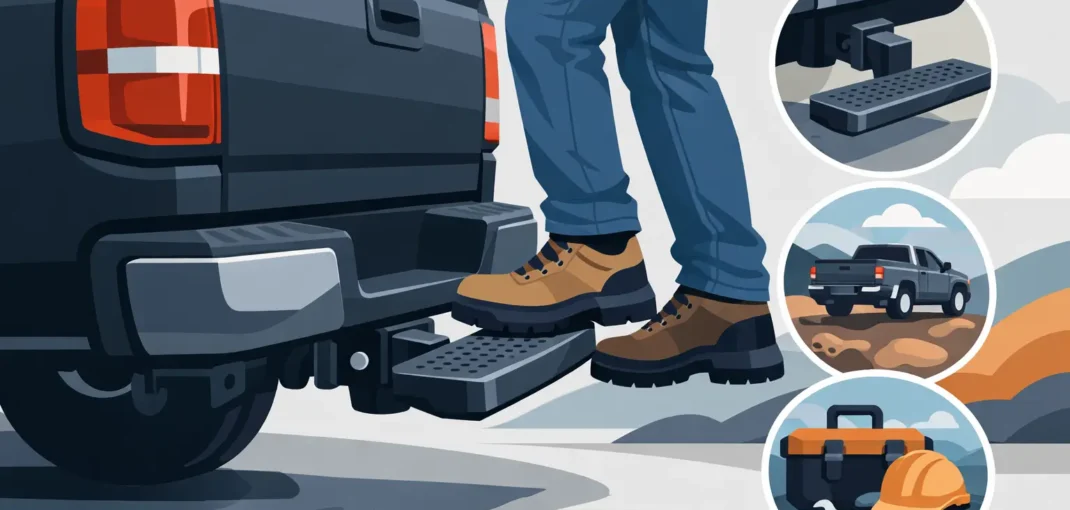
A truck hitch step solves a problem most pickup owners know well: the tailgate is up, the bed is loaded, and the bumper is just high enough to make grabbing gear awkward. Mounted in the rear receiver, a hitch step gives you a stable place to step while adding a tougher, more finished look to the back of your truck.
It is a small upgrade, but the right one can make daily work, weekend hauling, and wash-day access easier. The key is choosing a step that matches your receiver, your truck’s height, and the way you actually use the vehicle. A compact step may be perfect for a stock-height Silverado that sees regular bed duty. A lifted F-150 or heavy-duty GMC may benefit from a wider, lower-profile design with aggressive traction.
What a Truck Hitch Step Does for Your Pickup
The obvious job is access. A rear hitch step shortens the climb into the bed, making it easier to reach tools, coolers, recovery gear, camping supplies, or cargo that has shifted toward the cab. It is especially useful when the tailgate is closed and you only need to grab something quickly instead of dropping the gate every time.
A hitch-mounted step can also add a layer of rear-end protection in low-speed situations. Because it extends beyond the bumper, it may take the first contact from a minor parking lot bump or an accidental tap while backing toward a loading area. That does not make it a replacement for a proper bumper or a guarantee against damage, but it can help protect the painted bumper surface in everyday use.
Style matters too. Black powder-coated steel, textured finishes, aluminum construction, and molded non-slip pads all change the visual result. A black hitch step pairs naturally with blacked-out taillights, a dark grille, nerf bars, or running boards. On a work truck, it can simply look more purposeful than an open receiver tube at the center of the bumper.
Start With Receiver Size and Truck Setup
Most hitch steps are designed for common 2-inch receiver openings, which makes them a popular choice for full-size pickups and many SUVs. Still, do not assume every receiver is the same. Smaller receivers, oversized heavy-duty applications, aftermarket bumpers, and factory hitch designs can affect fitment and how far the step sits from the bumper.
Measure the receiver opening and check the pin-hole location before ordering. You also want to look at the distance from the receiver to the bumper face. If the step sits too close, it may be hard to use. If it sticks too far out, it can reduce departure clearance and become more noticeable when parking.
Truck height is just as important. A stock truck may only need a narrow step surface for quick access. Lifted trucks need a step that provides meaningful help, not one that remains nearly as high as the bumper. Look for a design with a broad stepping area and a textured or rubberized surface that stays secure when boots are wet, muddy, or dusty.
If your truck has parking sensors, a backup camera, or a spare-tire access point near the receiver, check clearance carefully. Some larger hitch accessories can interfere with sensor range or create a constant alert while backing up. The best fit is not only about whether the shank slides into the receiver. It is about whether the complete setup works with the equipment already on the truck.
Hitch Steps Are Not for Towing While Installed
A hitch step occupies the receiver, so it must be removed before connecting a trailer, bike rack, cargo carrier, or any other receiver-mounted accessory. Keep the hitch pin clip easy to reach and store the step where it will not roll around in the bed when you need to tow.
Do not treat a hitch step as a tow hook, recovery point, or substitute for a ball mount. Its job is stable foot placement and added rear protection. For trailer towing, always use the properly rated hitch ball mount and equipment for your load.
Choose the Material and Finish for How You Use Your Truck
Steel hitch steps are a strong option for truck owners who want a solid, substantial feel and a rugged appearance. Many are finished in black powder coat for corrosion resistance and a clean match with other exterior accessories. They are often a good fit for work trucks, off-road-inspired builds, and owners who prefer a heavier-duty look.
Aluminum steps are lighter and naturally corrosion resistant, making them appealing for trucks that see rain, snow, coastal air, or frequent washdowns. Depending on the design, an aluminum step can also offer a cleaner, more modern appearance. The trade-off is that the finish and overall visual weight may be different from a black steel bumper, hitch, or accessory package.
Rubberized or molded step pads add grip and can soften the look of a metal step. These are practical for daily bed access, especially if you wear work boots or use the truck in wet conditions. Bare metal tread surfaces can provide aggressive traction, but they may collect mud more easily and need occasional cleaning.
Finish choice is mostly personal, but it should work with your truck’s existing details. A gloss black step can stand out against a chrome bumper. A matte or textured black finish usually blends in more quietly with black trim. Polished metal makes a statement, but it may not be the right match for a smoked-lens, off-road-style build.
Pick a Step Shape That Fits Your Routine
A simple rectangular hitch step is a smart choice when access is the priority. It gives you a defined platform directly behind the truck and usually keeps the design compact. This style works well for owners who load and unload gear often but do not want a large accessory extending past the bumper.
Wider steps create more usable footing, which is valuable on tall pickups and heavy-duty trucks. They can also add more rear coverage, although the added width deserves extra attention in tight parking spaces. If your truck spends time on steep driveways, uneven trails, or loading ramps, consider how that extra projection affects departure angle.
Some hitch steps use an angled, tubular, or integrated design that follows the lines of the bumper. These can deliver a custom accessory look, particularly when matched with running boards or nerf bars. The best-looking design is still the one that leaves enough room for your foot and does not obstruct sensors, plates, or other rear components.
When comparing options, focus on these four shopping checks:
- Receiver opening size and hitch pin compatibility
- Step width, depth, and distance from the bumper
- Material, traction surface, and finish
- Clearance for sensors, camera visibility, and normal driving angles
Those details matter more than a generic claim that a step is universal. A universal receiver shank may fit many vehicles, but your bumper shape, lift height, exhaust outlet location, and parking equipment determine whether it is the right choice for your truck.
Installation Is Simple, but Securement Matters
Most truck hitch step installations take only a few minutes. Slide the shank into the receiver, line up the pin holes, insert the hitch pin, and secure it with the clip or locking mechanism. A locking hitch pin is worth considering if the truck is parked outside or the step will stay installed full time.
Before using it, pull firmly on the step and verify that the pin is fully seated. A small amount of movement inside the receiver is common, but excessive rattling can be annoying and may wear on the hitch over time. An anti-rattle device can help tighten the connection on compatible setups.
Check the step periodically, especially after driving on salted roads, rough trails, or job sites. Clean off packed mud, inspect the coating for chips, and make sure the pin has not loosened. If the step has a removable traction pad, keep it clear of oil and debris so it remains useful when you need it most.
Match the Upgrade to Your Truck, Not Just the Product Photo
A hitch step should look right from behind the truck, but it also needs to earn its place every time you load the bed. Select your vehicle, confirm receiver dimensions, and compare the step’s projection with your bumper and ride height before you buy. Car and Truck Zone makes it easier to shop exterior upgrades alongside the lighting, grille, and side-step accessories that complete the build.
Choose a truck hitch step that gives you confident footing, useful clearance, and a finish that matches the way your pickup works. The next time you reach over the tailgate for a heavy tool bag or a loose cargo strap, you will be glad that small upgrade is already in place.