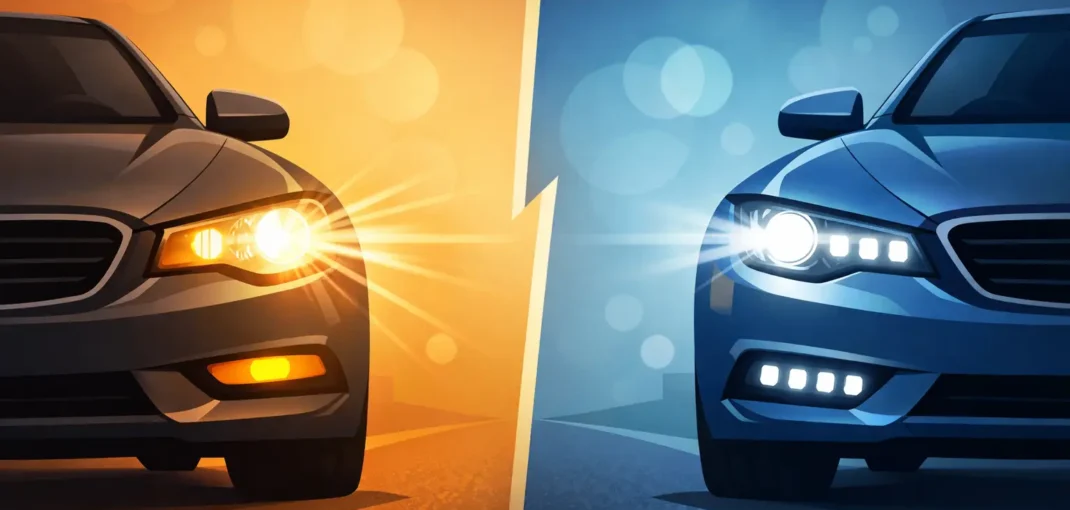
A burned-out factory bulb gives you a choice most drivers eventually face: replace it with another halogen or upgrade to LED. In the halogen versus LED decision, the better option is not always the one with the biggest brightness claim. Your vehicle’s headlight housing, electrical system, driving habits, budget, and local equipment rules all matter.
For many trucks, SUVs, and cars, LED lighting is a smart modernization upgrade. It can provide a cleaner white appearance, lower power draw, and a much longer service life. But a quality halogen bulb can still be the right answer when you need a simple, low-cost replacement that preserves the factory beam pattern.
Halogen Versus LED: The Main Differences
Halogen bulbs create light by heating a tungsten filament inside a small glass capsule filled with halogen gas. It is familiar technology, inexpensive, and used in millions of factory headlight, fog light, and interior-light applications. When the filament eventually fails, the bulb stops working and gets replaced.
LEDs work differently. Light-emitting diodes produce light electronically rather than through a heated filament. Because less energy is lost as heat at the light source, LEDs generally use less power and can last far longer than halogen bulbs. They also give many vehicles the crisp white light associated with newer factory lighting systems.
That difference sounds straightforward, but the bulb itself is only part of the system. A headlight housing was designed around a specific light source position and output. Installing an LED conversion bulb in a reflector housing that was engineered for halogen can change the beam pattern. If the LED chips are not positioned correctly, you may get glare for oncoming traffic, weak distance lighting, or bright-looking light that is not actually useful on a dark road.
Brightness Is More Than a Lumen Number
LED upgrades are popular because they can provide a brighter, whiter output than standard halogen bulbs. That can make road signs, lane markings, and the edge of the road easier to see, especially on rural drives or in bad weather. For truck owners running dark back roads, upgraded fog lights, marker lights, cab roof lights, and auxiliary light bars can also improve visibility around the vehicle.
Still, do not choose a headlight bulb based on a large lumen claim alone. The most useful headlight produces a controlled beam with a defined cutoff and usable light down the road. A bulb that scatters light everywhere may look impressive in a garage or against a wall, but it can reduce your ability to see where it counts.
For a halogen headlight housing, look for LED replacement bulbs designed to closely match the original filament location. Correct bulb orientation, a secure mounting position, and enough clearance behind the housing are just as important as output. On some vehicles, a complete LED headlight assembly is a better route because the housing, optics, and LEDs are designed to work together.
Color temperature affects the look and the road
Standard halogen headlights usually create a warm yellow-white light. LEDs commonly produce a cooler white output, often with a modern 5000K to 6500K appearance. The white color can make a truck or Mustang look newer while matching LED taillights, third brake lights, and smoked or black-housing exterior lighting.
Cooler is not automatically better, though. Extremely blue light can create more glare and may not perform as well in rain, snow, or fog. A clean white LED is usually the practical target for daily driving. For fog lights, beam pattern and proper aiming are often more valuable than choosing the highest color temperature available.
Lifespan, Heat, and Power Draw
A typical halogen bulb has a limited lifespan, particularly if it runs as a daytime running light or is exposed to frequent vibration. Replacing a halogen bulb is usually affordable, but repeated replacements can get old fast when access requires removing a wheel liner, air box, grille component, or other underhood parts.
LED bulbs can last substantially longer, which is one reason they are a popular upgrade for hard-to-reach applications. They also draw less electrical power than halogens. That lower draw can be useful when adding multiple lighting upgrades, such as LED marker lights, cab lights, bed lights, or auxiliary lighting.
LEDs still create heat, but they move it away from the diode through a heat sink or cooling fan rather than radiating it from a filament. This is where quality matters. A poorly built LED bulb with inadequate cooling may dim early, flicker, or fail. Before ordering, check the space behind your headlight housing. Some LED bulbs have larger heat sinks or fan assemblies that may interfere with a dust cap, wiring, or nearby components.
Fitment Comes Before the Upgrade
The fastest way to turn a lighting upgrade into a frustrating project is ordering by appearance instead of fitment. Headlight bulbs may look similar while using different bases, connectors, locking tabs, wattage requirements, or beam configurations. A Silverado, Sierra, F-150, Tahoe, Yukon, or Mustang can use different lighting setups across trims and model years.
Start with your vehicle’s year, make, model, and trim. Then verify whether you are replacing a low beam, high beam, fog light, daytime running light, or a complete assembly. Some vehicles use separate bulbs for low and high beams, while others use one dual-function bulb. Factory projector headlights, reflector headlights, and HID-equipped systems each require a different approach.
Also check whether your vehicle may need an anti-flicker harness, CAN bus decoder, load resistor, or adapter. Modern vehicles can monitor bulb resistance and trigger a warning light or flicker when an LED bulb draws less power than the original halogen. Not every vehicle needs these components, but they are worth considering before installation rather than after a dashboard warning appears.
At Car and Truck Zone, selecting your vehicle first helps narrow the choices to lighting and exterior parts built for your application. That is especially helpful when shopping for direct-fit LED headlight assemblies, taillights, third brake lights, or vehicle-specific fog light replacements.
When Halogen Is the Better Choice
Halogen is not outdated just because LED is popular. It remains a practical choice for drivers who need an inexpensive factory-style replacement, want to keep the original optical design unchanged, or simply need a dependable bulb quickly. A premium halogen bulb can offer improved output over a basic replacement without requiring extra wiring, cooling clearance, or electronic accessories.
Halogen can also make sense when your vehicle’s headlight housing is cloudy, cracked, or heavily worn. In that situation, the housing condition may be the real visibility problem. Restoring or replacing the assembly can make a bigger difference than installing a brighter bulb in damaged optics.
If you drive mostly in town, have good street lighting, and want easy maintenance with a low upfront cost, a quality halogen replacement may serve you well. Replace bulbs in pairs so the color and output match from side to side.
When an LED Upgrade Makes Sense
LED is often the right move if you want modern styling, longer-lasting lighting, and improved usable output from a properly matched setup. It is especially appealing for owners updating an older truck, refreshing worn factory lighting, or building a consistent LED look across headlights, taillights, marker lights, and cab lights.
Choose LED carefully if you frequently drive at night, tow after dark, travel rural highways, or use your truck for work. A vehicle-specific LED assembly or a well-designed conversion bulb can provide a noticeable improvement when it creates the correct beam pattern and has adequate cooling.
For exterior upgrades, matching the lighting style can tie the vehicle together. Black-housing LED headlights, smoked LED taillights, and LED third brake lights can sharpen the look of a truck or SUV while replacing faded, cracked, or outdated factory components. Just make sure lens color, lighting functions, and installation choices remain legal for use on public roads where you drive.
Installation and Aiming Matter
Even the best lighting parts need correct installation. Wear gloves when handling halogen bulbs because oils from your skin can create hot spots on the glass and shorten bulb life. With LEDs, confirm that the bulb is fully seated, the connector is secure, and the cooling hardware has room to work.
After any headlight bulb or assembly replacement, check the aim on level ground against a wall. Headlights aimed too high can blind other drivers. Lights aimed too low reduce the distance you can see. A simple aim check protects your visibility and makes the upgrade more courteous for everyone else on the road.
The right choice comes down to the job your vehicle needs to do. Choose halogen for straightforward, factory-style replacement value. Choose a quality, vehicle-compatible LED setup when you want a longer-lasting lighting upgrade with modern color and stronger nighttime performance. Start with fitment, choose the correct component for the housing, and let the road decide whether your lights are truly doing their job.