
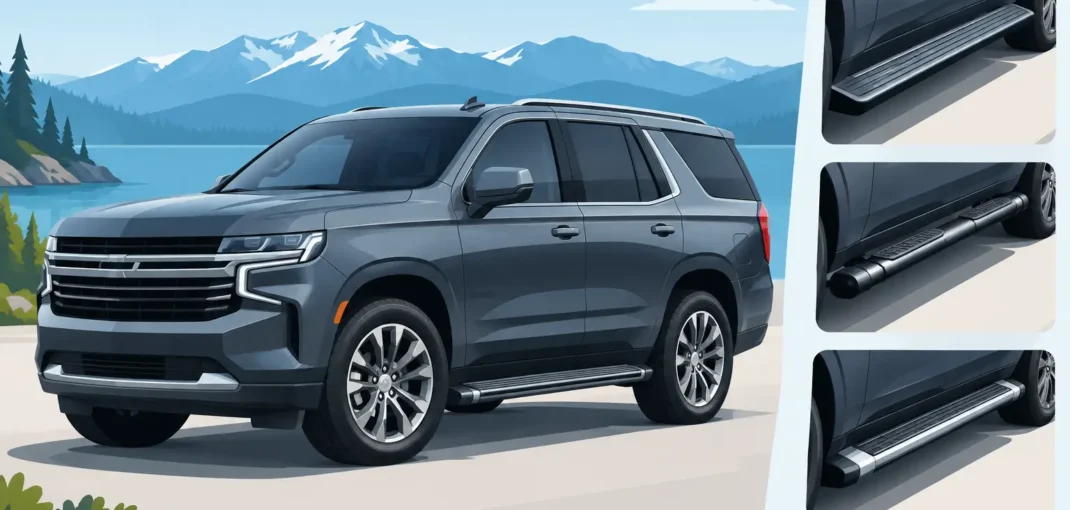
A Tahoe sits high enough that getting in should not feel like a climb. The best Tahoe side steps give drivers, kids, passengers, and pets a solid stepping surface while adding a finished look along the rocker panels. The right set can also help keep road debris away from the lower body, but choosing correctly starts with more than picking a black finish.
Tahoe side steps need to match your exact model year, body style, and intended use. A clean-looking running board that does not fit the factory mounting points is not an upgrade. Before shopping, select your vehicle and decide whether daily accessibility, aggressive truck styling, ground clearance, or powered convenience matters most.
Start With Exact Tahoe Fitment
Chevrolet Tahoe generations use different frame and body mounting locations. Side steps for a 2007-2014 Tahoe will not automatically work on a 2015-2020 model, and the current-generation 2021-2026 Tahoe has its own fitment requirements. This is especially important when shopping used parts, universal steps, or accessories listed with broad year ranges.
Confirm the model year first, then verify whether the product is designed for a Tahoe specifically or for a Tahoe and GMC Yukon application. These SUVs often share platforms, but the listing should still clearly state compatible years and body style. If your Tahoe has factory power assist steps, check whether you are replacing the full assembly, adding a fixed step solution, or choosing parts that work around existing equipment.
Mounting method matters too. The best options use vehicle-specific brackets that attach to factory locations. That means less drilling, a more secure installation, and a better chance of keeping the steps level and properly positioned under the doors. A direct-fit kit should include the brackets and hardware needed for the listed application, but always review what is included before ordering.
Best Tahoe Side Steps by Everyday Need
There is no single board style that works best for every Tahoe owner. A family SUV that sees school drop-offs and grocery runs needs something different than a blacked-out Tahoe that spends weekends on rough roads or towing a trailer.
Running Boards for the Widest Footing
Full-length running boards are a practical choice for daily-driven Tahoes. Their wide, flat stepping surface is easier to use in rain, snow, work boots, or low-light conditions. They are also a strong option for households with younger passengers, older family members, or anyone who wants more confidence entering a lifted or stock-height SUV.
Look for a textured top surface, molded grip pads, or integrated traction channels. Smooth metal may look clean when new, but traction is what makes a step useful when the weather turns. Full-length boards also create a more integrated, SUV-style appearance than a narrow tube step.
The trade-off is clearance. Wide running boards sit farther out from the body and can collect dirt, salt, and slush. They also may be more visible from the side, which is ideal for a finished street look but less ideal for owners who want the body tucked in tight for uneven terrain.
Nerf Bars for a Sportier, More Open Look
Nerf bars use a round or oval tube design with step pads placed beneath each door. They are a popular match for Tahoe owners who want a tougher truck-inspired appearance without covering the entire rocker area. Black powder-coated bars fit especially well with black wheels, tinted lighting, dark trim, and a black grille.
A 3-inch or 4-inch bar can provide dependable access while keeping the profile slimmer than a full board. Oval bars generally give you a flatter place to step than round tubes, so they are often the better choice when regular passenger use is a priority.
Nerf bars do have smaller step pads than full boards. If a child regularly uses the third-row seating area, or if you frequently load passengers in wet conditions, a wide running board may be the more comfortable option.
Hoop Steps for Clearance and Rugged Style
Hoop steps, sometimes called cab-length bars with drop steps, place a distinct step below each door. This creates a more aggressive stance and often delivers more ground clearance between stepping points than a wide board. They are a good fit for Tahoe owners who want an off-road-inspired build, larger tires, or a lifted suspension.
The lower step position makes entry easier, especially on a lifted Tahoe. On the other hand, the dropped design can be exposed to rocks, curbs, and deep snow. Consider where and how you drive before choosing this style. A Tahoe used mainly for pavement can benefit from the look, while one used on tight trails may need a higher-clearance solution.
Power Steps for a Factory-Style Upgrade
Power running boards retract under the SUV when the doors are closed and deploy when a door opens. For owners who want the cleanest side profile without giving up a wide stepping surface, they are hard to beat. They can also improve access for passengers without leaving a large board exposed all the time.
Powered steps cost more than fixed steps and add moving components, wiring, and electronics. They are best for owners who prioritize convenience and appearance and are comfortable with a more involved installation. In snowy or muddy conditions, regular cleaning is smart because packed debris can affect movement over time.
Choose Materials and Finishes That Match Your Use
Most Tahoe side steps use either aluminum or steel construction. Aluminum running boards are lighter and naturally resistant to corrosion, making them a smart choice for areas with heavy rain, road salt, or coastal air. They often have a clean, modern appearance and can support a wide step surface without adding unnecessary weight.
Steel nerf bars and hoop steps bring a solid, heavy-duty feel. A quality powder-coated finish helps resist chips and corrosion, especially in black. Still, any finish can be damaged by road debris. If you drive through salted winter roads, wash the underside of your Tahoe and the mounting areas regularly.
Stainless steel remains a strong option for a bright, classic look and good corrosion resistance. It stands out more than black, so it works best when you want chrome or polished accents to be part of the build. For a Tahoe with smoked lights, black wheels, and dark exterior trim, textured black or gloss black steps usually create the more cohesive result.
Check Step Placement Before You Buy
A side step can be well-made and still be inconvenient if it is not positioned where passengers need it. Cab-length designs generally run beneath the front and rear doors, offering access for all seating rows. This makes them the most versatile choice for a Tahoe because rear passengers use the vehicle as often as the driver.
Wheel-to-wheel boards extend farther toward the rear tire. On a Tahoe, that extra length can be useful when reaching cargo on a roof rack or accessing gear mounted near the rear of the SUV. They are less necessary for every owner, but they can add real convenience if you frequently carry kayaks, cargo boxes, or work equipment.
Also consider the relationship between the step and the door opening. A board that sits too close to the body may not offer enough usable footing. One that extends too far can catch more debris or make the Tahoe feel wider in a tight garage. Product photos help, but vehicle-specific measurements and fitment details are the better buying tools.
Installation Details That Save Time
Many fixed Tahoe running boards and nerf bars can be installed with basic hand tools. The vehicle-specific brackets usually bolt to factory mounting points under the body, which keeps the process straightforward for capable DIY owners. Lay out all brackets and hardware first, loosely install everything, then align the board before tightening the fasteners.
Do not assume left and right brackets are interchangeable. Follow the included instructions closely, and check that the steps clear the doors through their full range of motion. After a few drives, recheck hardware torque. This is a simple step that can prevent rattles and keep the installation secure.
Power steps require more planning. Along with mechanical mounting, they need proper wiring connections and routing away from heat, moving suspension parts, and sharp edges. If wiring is outside your comfort zone, professional installation can be worth it.
Shop for a Tahoe Upgrade That Works Every Day
At Car and Truck Zone, start by selecting your Tahoe year, then compare the board style, finish, and mounting design that fit your build. Focus on direct-fit applications, traction where you need it, and a length that serves every passenger who uses the SUV.
A good side step should look right on your Tahoe, but it should also make every entry, loading stop, and weekend trip easier. Pick the style you will appreciate on an ordinary Tuesday, not just the one that looks best in the parking lot.