
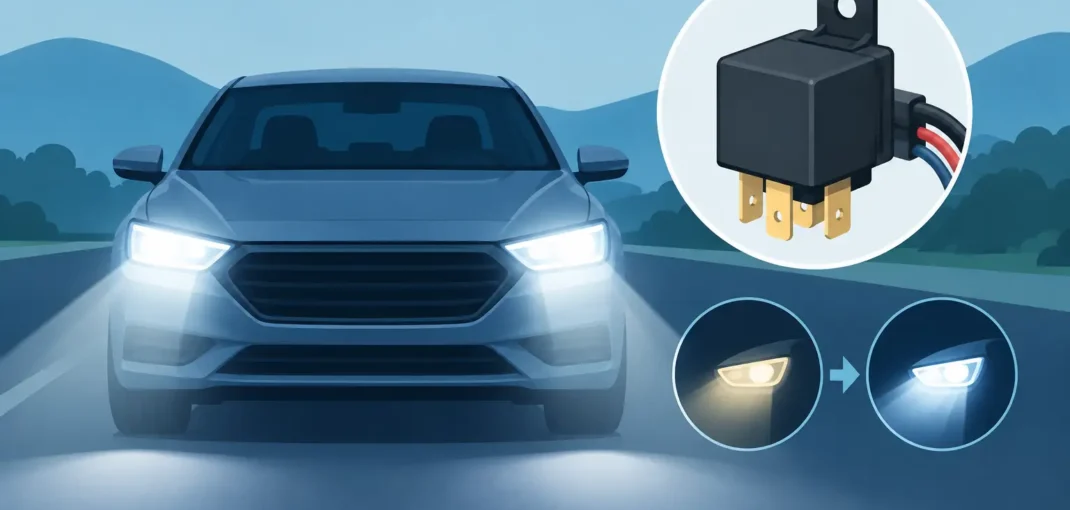
A new set of headlights can change the look of a Silverado, Sierra, F-150, or Mustang in one afternoon. Before ordering a relay harness, though, ask the right question: do headlights need relays on your specific vehicle and with your specific lights? The answer is sometimes, not always. A relay can solve a real voltage-delivery problem on an older halogen system, but it is not an automatic upgrade for every direct-fit LED headlight assembly.
Do Headlights Need Relays? The Short Answer
Headlights need relays when the factory circuit is carrying more current than its wiring, switches, connectors, or voltage supply can comfortably handle. A relay harness lets the original headlight circuit act as a low-current trigger while the headlights draw power through a properly fused wire connected closer to the battery.
That setup can be a smart move for older vehicles with sealed-beam headlights, aging wiring, or high-draw halogen bulbs. It can reduce voltage loss and help filament bulbs operate closer to their rated output.
Many newer vehicles already use factory relays, fuse-box control, or a body control module to operate the headlights. Many direct-fit LED replacement headlights also draw less power than the original halogen assemblies. In either case, adding a universal relay harness may provide no benefit and can create installation or compatibility issues.
The best approach is to match the wiring plan to the vehicle, the headlight type, and the installation instructions for the specific assembly.
What a Headlight Relay Actually Does
A relay is an electrically controlled switch. Instead of routing full headlight current through a dash switch, a headlight connector, or a long run of original wiring, the factory circuit turns on the relay. The relay then sends battery power to the lights through heavier-gauge, fused wiring.
That matters because every connector, splice, switch, and length of wire creates a small amount of electrical resistance. On an older truck, corrosion at a connector or a tired ground can leave a halogen bulb receiving less voltage than it should. Even a modest voltage drop can make a filament bulb noticeably dimmer and more yellow.
A relay harness does not magically make a bulb more powerful. What it can do is supply the bulb with steadier voltage when the factory wiring is the restriction. It also moves the higher-current load away from vulnerable old switches and connectors.
For a typical relay harness, the stock headlight plug becomes the trigger. Fused power comes from the battery, relays distribute that power to the low and high beams, and dedicated ground wires complete the circuit. Quality, secure connections are just as important as the relay itself.
When a Relay Harness Makes Sense
A relay upgrade is most useful when you are restoring or upgrading an older halogen headlight system. Classic cars, older pickups, and vehicles with long factory wiring paths are common candidates. If the headlights brighten when engine speed rises, look dim at idle, or have visibly heat-damaged connectors, the system deserves inspection.
A harness can also make sense when installing legal, compatible higher-draw halogen bulbs in a vehicle whose original system was designed around lower-wattage lamps. However, increased wattage is not a shortcut to better lighting. Excess heat can damage reflectors, lenses, sockets, and wiring. It may also produce glare or fail to meet road-use requirements. Better optics and correct aiming usually matter more than simply adding wattage.
Consider a relay harness if you find all of the following:
- The vehicle uses conventional halogen or sealed-beam headlights.
- Voltage at the bulb is meaningfully lower than battery voltage with the lights on.
- The factory connectors, switch circuit, or wiring show signs of age, resistance, or heat.
- The replacement headlights or bulb manufacturer specifically calls for a relay harness.
Before installing one, fix obvious problems first. A corroded ground, weak battery terminal, melted socket, failing alternator, or poor aftermarket splice will not be cured by adding relays. The new harness could hide the symptom while the original fault remains.
When You Usually Do Not Need a Relay
For most late-model, direct-fit LED headlight assemblies, a relay harness is not automatically required. LEDs generally use less current than halogen bulbs, and vehicle-specific assemblies are designed to connect to the factory headlight plugs. If the product is listed for your exact year, make, model, and trim, follow its included instructions before adding extra wiring.
Modern trucks and SUVs can use a body control module, pulse-width-modulated headlight signal, bulb-out monitoring, or computer-controlled output protection. A basic universal relay harness may not work correctly with those systems. It can trigger flickering, daytime running light problems, warning messages, or a loss of high- or low-beam function.
Some LED products need a decoder, anti-flicker module, load resistor, or vehicle-specific adapter instead of a relay. Those parts address a different issue: the vehicle’s electronics may not recognize the lower draw of an LED system or may send a pulsed signal that affects operation. Do not confuse a CANbus decoder with a relay harness. They serve different purposes.
There is also no reason to add a relay simply because an LED headlight looks brighter than the factory halogen unit. A properly designed LED assembly gets much of its performance from its projector or reflector design, LED placement, lens clarity, and beam pattern. Reliable plug-and-play operation and correct aiming are more valuable than unnecessary extra components.
Check Your Vehicle Before Ordering Parts
Start with fitment. Select the exact year, make, model, and trim, then confirm whether the vehicle came with halogen, HID, LED, sealed-beam, or projector headlights. A factory LED-equipped model can have a very different electrical setup from the halogen version of the same truck.
Next, identify the goal. If you are replacing a cracked or moisture-damaged assembly with a direct-fit LED unit, use the wiring supplied or recommended for that assembly. If you are restoring an older truck with dim sealed beams, inspect the voltage at the headlight plug and the condition of the grounds. That is where a relay harness can earn its place.
A basic voltage test is useful. With the headlights on and the engine running, measure battery voltage and compare it with voltage at the bulb connector. A large difference points to resistance in the circuit. Also inspect both the positive and ground side. Many dim-light complaints are caused by a weak ground near the radiator support, core support, fender, or frame.
If you are not comfortable testing live electrical circuits, a qualified installer can diagnose it quickly. Avoid guessing with wiring changes, especially on newer vehicles with computer-controlled lighting.
Install Relays the Right Way
If your application calls for a relay harness, mount the relays away from direct water spray and excessive heat. Route the harness clear of exhaust components, fan blades, belts, steering parts, and sharp sheet metal. Use loom, clips, and grommets where needed so the wiring cannot rub through over time.
Connect the fused power lead at the battery as instructed, and use the fuse size supplied with the harness. Never replace it with a larger fuse to stop repeated blowing. A blown fuse is a warning that the circuit has a short, an incorrect connection, or an electrical load beyond the harness rating.
Ground connections need clean, bare metal and a secure fastener. Paint, rust, and loose hardware create resistance. After installation, test low beams, high beams, turn signals, parking lights, daytime running lights, and any warning indicators before reassembling trim panels.
Finally, aim the headlights. Whether you install replacement halogens, LED headlights, or a relay harness, beam aim determines whether the light reaches the road instead of other drivers’ mirrors. Park on level ground, follow the vehicle or headlight manufacturer’s aiming procedure, and make small adjustments.
Shop Lighting by Fitment, Not Assumption
The safest lighting upgrade begins with parts built for the vehicle in your driveway. At Car and Truck Zone, use year-make-model fitment to narrow your options, then review the housing style, lens color, lighting technology, and installation notes. A black-housing LED headlight designed for your truck is a better starting point than a universal electrical fix.
If your factory wiring is healthy and the direct-fit assembly is designed for the stock connector, keep the install simple. If you are working on an older halogen system with voltage loss, treat a fused relay harness as a practical electrical upgrade, not a universal add-on.
Choose the headlight setup that fits your vehicle’s wiring as well as its front-end style. That gives you a cleaner install, dependable nighttime visibility, and lighting you can count on every time you turn the key.