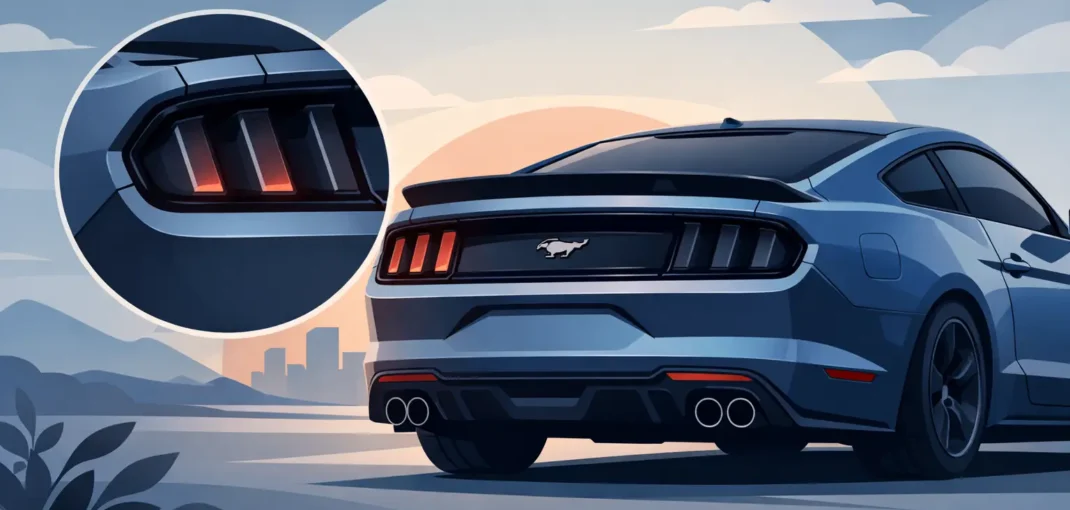
A smoked taillight swap can change the entire rear view of a Mustang without changing its body lines, wheels, or paint. Ford Mustang smoked taillights give the car a darker, more aggressive finish while also creating an opportunity to replace faded factory housings or move up to modern LED lighting.
The key is buying for more than appearance. A taillight needs to match your Mustang’s model year, body style, wiring setup, and lighting requirements. The right set should look sharp in daylight, stay visible after dark, and install without turning a simple exterior upgrade into a wiring project.
What Smoked Taillights Change on a Mustang
Smoked lenses reduce the bright red appearance of the taillight when the lights are off. Depending on the housing and lens design, the finish may range from lightly tinted to nearly black. On a black, gray, silver, white, or dark blue Mustang, smoked taillights can tie together a blacked-out grille, rear spoiler, wheels, badges, and exhaust tips.
They also work well when the original taillights have haze, cracks, moisture, broken mounting tabs, or worn seals. Instead of restoring an aging factory housing, a direct-fit smoked replacement can refresh the rear end and provide updated styling in one job.
Smoked does not automatically mean dim. Quality assemblies are designed so the brake, running, turn signal, and reverse-light functions remain easy to see when activated. That distinction matters. A dark lens is a style choice, but the lighting output still has a job to do every time you drive at night, brake in traffic, or back out of a parking space.
Choose Ford Mustang Smoked Taillights by Fitment
Mustang taillights have changed significantly across generations. A part built for a 1967-1968 classic Mustang is not interchangeable with a Fox Body, SN95, New Edge, S197, S550, or S650 model. Even within one generation, coupe, convertible, and trim-level details can affect fitment and electrical connections.
Start with the exact year, make, and model. Then confirm the body style and whether the listing is for the driver side, passenger side, or a complete pair. This is especially important when replacing a damaged single housing. A new smoked lens beside an older factory light can look mismatched, even if both are technically functional.
For late-model Mustangs, check whether the assembly is designed for factory halogen or LED-equipped applications. Some upgrades use plug-and-play connections, while others may need adapters, load resistors, or additional wiring. Product descriptions should clearly identify the model-year range, lens color, housing color, bulb type or integrated LED design, and installation position.
Before ordering, compare the mounting points, connector style, and reverse-light arrangement with your original taillight. Vehicle selection tools make this faster, but a quick visual check can prevent an avoidable return.
Classic Mustang Considerations
Classic Mustang owners often have more flexibility in choosing custom rear lighting, but older electrical systems deserve extra attention. If you are converting to LED taillights, verify whether the car needs an electronic flasher or compatible relay to maintain normal turn-signal operation. Weak grounds, corroded sockets, and old wiring can also create problems that a new housing will not solve.
On a restoration-inspired build, a lightly smoked lens may preserve more of the original Mustang character. For a restomod or pro-touring setup, darker housings with LED elements can deliver a more modern look without changing the car’s recognizable rear profile.
Late-Model Mustang Considerations
S197, S550, and newer Mustang owners should pay close attention to factory electronics and trim-specific lighting. Sequential turn signals, integrated LED bars, and body-control-module monitoring can affect which assemblies work correctly. Do not assume that a taillight with a similar shape will connect and function like the original.
If your Mustang has factory sequential lighting, choose an assembly specifically listed to retain or provide that feature. It is a detail that makes a difference in both appearance and proper operation.
Smoked Lens vs. Tinted Film
A purpose-built smoked taillight assembly is generally the cleaner option for owners who want a long-term upgrade. The lens and housing are designed together, and the finish is part of the component rather than a film applied over an old light.
Tint film can cost less upfront and gives you control over how dark the lens becomes. However, it can bubble, lift at the edges, collect moisture, or reduce light output if it is too dark. It also leaves the original housing, seals, and bulbs in place. If your current taillights are cloudy or damaged, film only covers the problem.
A complete replacement assembly costs more than film, but it can provide fresh lenses, new seals, updated housings, and LED technology in one purchase. For many Mustang owners, that better finish and reduced hassle are worth it.
LED Benefits and Real-World Trade-Offs
LED smoked taillights are popular because they produce a crisp, immediate light response. Compared with many older incandescent setups, LEDs can offer a brighter, more defined brake-light pattern and use less power. They also pair naturally with the modern appearance of smoked lenses.
Still, LED is not a blanket guarantee of better performance. Housing design, optics, internal components, and fitment matter as much as the word LED in a listing. A poorly matched assembly may trigger fast-flashing turn signals, warning messages, condensation issues, or uneven lighting.
Look for direct-fit assemblies with clear application information. If a set requires additional components, plan for them before installation. It is better to know you need a resistor, harness, or coding step than to discover it after the taillights are mounted.
Visibility and Street-Legal Use
The darker the lens, the more carefully you should consider visibility. State and local laws vary, and requirements may address lens color, reflectors, light output, and whether a lamp is approved for road use. A smoked taillight that looks great at a meet may not be the best choice for a daily-driven Mustang in heavy rain, snow, or dense city traffic.
Check the product details for road-use markings and follow applicable regulations where you drive. Avoid adding extra tint over an already smoked lens. That can make brake lights, turn signals, and reverse lights harder for other drivers to see.
After installation, test every function before the car leaves the driveway. Turn on the parking lights, press the brake pedal, activate both turn signals, shift into reverse with proper precautions, and verify hazards. Have someone stand behind the Mustang at a reasonable distance so you can confirm the lights are visible from the real-world viewing angle.
Installation Tips Before You Start
Most direct-fit Mustang taillight replacements are manageable for a prepared DIY owner. Access commonly comes through the trunk area or rear interior trim, followed by removing retaining hardware, disconnecting the harness, transferring any required bulbs or parts, and installing the new assembly.
Work carefully around painted surfaces and avoid forcing connectors. A broken clip or pinched weather seal can turn into rattles, water intrusion, or intermittent electrical issues later. Before tightening the hardware completely, make sure the housing sits flush with the body and that panel gaps look even from both sides.
If you notice moisture inside a new taillight after installation, inspect the seals, mounting alignment, and any vents specified by the manufacturer. A small amount of temporary condensation can occur with temperature changes, but standing water or repeated heavy moisture needs attention.
For a clean install, wash the area behind the taillights before mounting the new housings. Dirt trapped around the gasket can compromise the seal and make a fresh upgrade look unfinished.
Build a Cleaner Rear-End Look
Smoked taillights look their best when the rest of the rear end is intentional. You do not need to change everything at once. A clean bumper, polished exhaust tips, fresh rear emblem treatment, and a matching smoked third brake light can create a cohesive result without overdoing the blackout theme.
Keep function ahead of appearance. Your Mustang should still be easy to see when braking, signaling, and reversing. Select your vehicle, confirm the application, and choose Ford Mustang smoked taillights that give your build the darker look you want without compromising the fit and lighting performance you need. Car and Truck Zone helps make that search easier with year-make-model shopping for Mustang lighting upgrades.