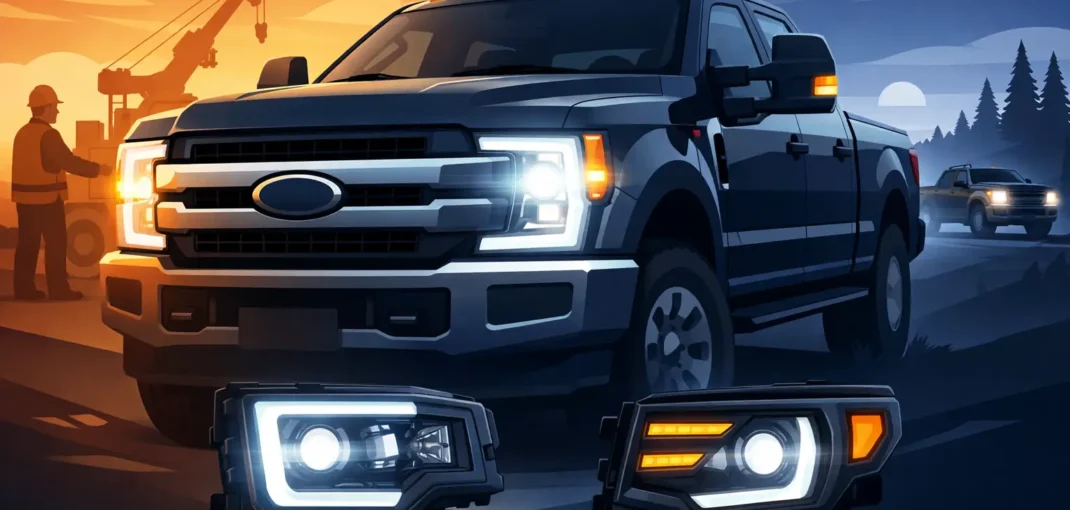
A faded lens, moisture inside the housing, or a weak factory beam can make a capable Super Duty feel older than it is. The best Ford Super Duty headlights do more than sharpen the look of an F-250, F-350, or F-450. They help you see road edges, job sites, trailer connections, and changing weather with more confidence after dark.
For most owners, the right choice comes down to three things: exact fitment, usable light output, and a housing style that matches the truck. A black-housing LED assembly may be the right upgrade for one build, while a factory-style replacement headlight is a smarter move for a daily work truck. Start with how you use the truck, then narrow the options by year, trim, and lighting features.
What Makes the Best Ford Super Duty Headlights?
There is no single headlight set that is best for every Super Duty. A truck that spends its time pulling equipment before sunrise needs a different setup than a weekend show truck with a blacked-out grille and smoked accessories. The best option is one that fits correctly, produces a controlled beam pattern, and delivers the appearance you want without creating installation headaches.
Fitment should always come first. Ford Super Duty front-end designs changed significantly across generations, and headlights that look similar can have different mounting points, connectors, grille shapes, and bulb configurations. Confirm the model year, truck model, cab configuration where applicable, and whether the truck has factory halogen, HID, or LED lighting before ordering.
After fitment, pay attention to the complete assembly. Replacing the full headlight housing can solve several issues at once: cloudy lenses, damaged tabs, leaking seals, faded reflectors, and outdated styling. A complete direct-fit assembly also gives you a cleaner visual result than trying to update only a bulb in a worn factory housing.
Choose the Right Headlight Style for Your Truck
The housing finish and lens design have a major impact on the truck’s front-end appearance. Chrome housings are usually the closest match to factory styling and work well when you want a clean replacement without changing the look of the truck. They are a practical choice for work trucks, restoration-minded owners, and anyone replacing a broken original assembly.
Black housings bring a more aggressive, updated look. They pair naturally with black grilles, black wheels, tinted windows, and other dark exterior upgrades. On lighter-color Super Duty trucks, black headlights can add contrast that makes the front end look more defined. On a black truck, they create a uniform, custom appearance.
Smoked lenses are another popular option, but they are not for every build. A lightly smoked lens can give the front end a darker style while retaining a visible lighting layout. Heavier smoked designs can reduce the amount of light passing through the lens, depending on the assembly. If nighttime visibility is a top priority, a clear lens with a black housing is often the better balance.
LED accent designs are ideal for owners who want a more modern signature. These assemblies may use LED daytime running light bars, halo-style accents, or sequential turn signals. The visual upgrade is obvious, especially on older Super Duty generations, but it is still worth checking how the assembly handles low beam, high beam, turn signal, and parking light functions. Style should not come at the cost of basic road visibility.
LED Headlights vs. Factory-Style Replacement Assemblies
An LED-forward headlight assembly is a strong choice when the goal is a newer look and a more current lighting setup. LED accents turn on quickly, use less power than many older incandescent components, and add a recognizable custom appearance. For trucks used around driveways, farms, yards, and job sites, brighter-looking front lighting can also improve the truck’s presence around other vehicles and equipment.
Still, LED does not automatically mean better performance. Light output depends on the projector or reflector design, internal optics, aim, and the quality of the components. A poorly designed LED assembly can throw light in the wrong places, create glare for oncoming traffic, or leave dark spots in the beam. Look for assemblies built as complete vehicle-specific replacements instead of trying to force universal components into the factory location.
Factory-style replacement headlights make sense when the priority is straightforward repair. If a Super Duty has one cracked lens, water intrusion, or a broken mounting tab after a minor front-end hit, a direct-fit replacement restores the truck without changing its original character. This route can be especially practical for fleet trucks and daily drivers where dependable fitment matters more than custom styling.
For many owners, the sweet spot is a vehicle-specific black or chrome assembly with clear lenses and modern LED running light features. It refreshes the truck without going too far from the factory design.
Beam Pattern and Visibility Matter More Than Advertised Brightness
The best Ford Super Duty headlights should put light where you need it: down the road, across the shoulder, and low enough to avoid blinding other drivers. Raw brightness numbers do not tell the complete story. A clean cutoff and even distribution are more useful than a headlight that looks extremely bright when viewed from the front but performs poorly from the driver’s seat.
Projector-style headlights are often favored for their focused beam control. They can create a more defined low-beam pattern and a crisp modern look behind the lens. Reflector-style designs are commonly closer to factory construction and can be a solid replacement option when paired with quality bulbs and a clear lens.
Once the headlights are installed, aim them correctly. Even a direct-fit assembly can need adjustment after installation, especially if the truck has a leveling kit, larger tires, a replacement bumper, or a different front suspension height. Park on level ground, follow the adjustment procedure for your truck, and verify that both beams are even. Proper aim protects your visibility and helps keep glare out of other drivers’ mirrors.
Fitment Checks Before You Order
Super Duty fitment is not a detail to guess at. The F-250, F-350, and F-450 often share components within certain year ranges, but equipment packages and lighting systems can change the correct part. Use the vehicle selector and compare the product application against the truck in your driveway.
Before choosing headlights, verify these details:
- Model year, including whether the truck falls at the beginning or end of a body-style generation.
- Exact model: F-250 Super Duty, F-350 Super Duty, or F-450 Super Duty.
- Factory lighting configuration, such as halogen, HID, LED, or a specific daytime running light setup.
- Housing finish and lens color you want, including chrome, black, clear, or smoked styling.
- Connector style, bulb requirements, and whether the assembly includes bulbs or uses your existing components.
- Local lighting requirements if you are considering a heavily smoked lens or a highly customized setup.
Also inspect what is around the headlights. A loose grille, damaged header panel, bent core support, or missing mounting hardware can prevent a new assembly from lining up correctly. Headlights are designed for direct replacement, but they still need solid factory mounting locations to sit flush against the grille and fenders.
Plan the Installation Before the Box Arrives
Many Super Duty headlight assemblies are manageable for a capable DIY installer, but access varies by generation. Some trucks require removal or loosening of the grille, trim pieces, upper covers, or fasteners before the housings can come out. Set aside enough time to work carefully rather than rushing the job in a parking lot after dark.
Disconnecting the battery is a sensible precaution when working around electrical connectors. Transfer bulbs, sockets, or wiring components only if the new assembly requires it, and avoid touching halogen bulb glass with bare fingers. Before reinstalling trim, test both low beams, high beams, turn signals, parking lights, and daytime running lights. That quick check is much easier with the front end still open.
Check the lens seals after the first few drives, especially after rain or a wash. A small amount of temporary condensation can happen with temperature changes, but standing water or repeated heavy fogging inside the housing points to a sealing problem that should be addressed.
Build a Better-Looking Super Duty Front End
Headlights have a bigger visual effect when they are matched with the rest of the truck. A black-housing setup looks especially sharp with a dark grille, smoked cab roof lights, black mirror caps, and a matching third brake light. Chrome housings work well with polished bumpers, chrome grilles, and factory-style trim. The goal is not to add every accessory at once. It is to make the front end look intentional.
Car and Truck Zone makes it easier to shop vehicle-specific lighting by narrowing options through year, make, and model fitment. Once you identify the right application, you can compare housing colors, lens styles, and LED features without sorting through universal parts that may not belong on your truck.
A Super Duty earns its keep in tough conditions, so choose headlights that suit the way you actually drive it. Select your vehicle, confirm the application, and give your truck the clear view and updated front-end style it deserves.