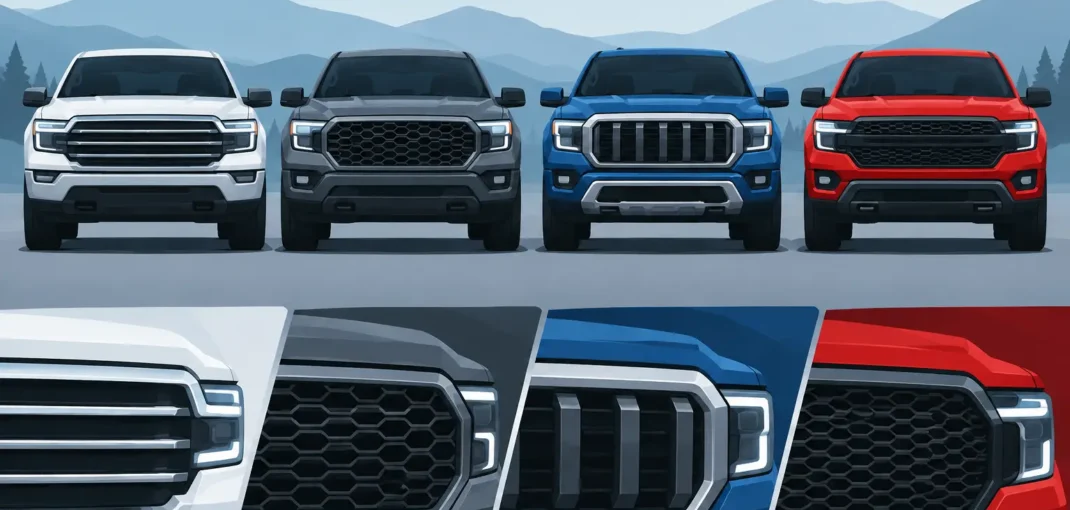
A grille can make a stock pickup look newer, tougher, cleaner, or more work-ready before you change anything else. That is why comparing the top pickup truck grille styles is a smart first step when planning a front-end upgrade. The right grille needs to match more than your taste. It should fit your truck’s year, make, model, trim details, camera provisions, sensor locations, and the overall look of your headlights and bumper.
For a Silverado, Sierra, Ford F-Series, or other full-size pickup, a direct-fit grille is often one of the fastest ways to replace a cracked factory piece or move away from a faded chrome front end. Whether you want a blacked-out street look, classic billet bars, or an LED-equipped off-road appearance, the finish and design you choose will set the tone for the entire truck.
Top Pickup Truck Grille Styles to Consider
Black Mesh Grilles
Black mesh is one of the most popular choices for late-model pickups because it delivers an aggressive look without being difficult to match. The pattern can range from fine woven mesh to larger honeycomb openings, giving owners options from subtle to bold. Matte black works well with black wheels, smoked lighting, and dark emblems, while gloss black adds a cleaner, more custom appearance.
This style is especially effective on trucks that came with bright chrome grille surrounds or bars from the factory. Swapping to a black mesh grille can reduce visual clutter and make the headlights, hood line, and bumper stand out more. It also suits both daily-driven trucks and lifted builds.
The trade-off is that not every black mesh grille has the same level of airflow or the same opening size. If your truck sees heavy towing, hot climates, or low-speed off-road use, look closely at how open the mesh design is. A grille should enhance the front end without unnecessarily restricting air moving toward the radiator.
Honeycomb and Factory-Style Sport Grilles
Honeycomb grilles have a rugged, factory-inspired appearance that works particularly well on newer Chevy, GMC, and Ford trucks. Their geometric pattern looks more purposeful than traditional horizontal bars, but they can still feel close to an OEM sport package rather than overly customized.
This is a strong option for owners who want an upgrade that looks like it could have come from the factory. Choose a grille with a color and texture that complement the bumper trim. Textured black is a practical match for off-road-focused trucks, while painted gloss black or body-color surrounds can work well on street-oriented builds.
Factory-style sport grilles are also a good replacement path when a stock grille is damaged. You can refresh the truck’s front end while changing its personality at the same time. Before ordering, confirm whether your original grille includes openings for a front camera, active shutters, parking sensors, or a trim-specific emblem mount.
Billet Grilles
Billet grilles use clean horizontal or vertical bars for a classic custom-truck look. Polished aluminum billet remains a popular fit for older pickups, show trucks, and builds with chrome bumpers or bright wheels. Black billet designs offer the same bar-style appearance with a more current, blacked-out finish.
A billet grille can make a truck look lower, wider, and more refined. On classic Chevy and Ford applications, it can be a natural upgrade because it respects the simple lines of older body styles. On a newer truck, the look depends on the rest of the build. Polished bars may clash with smoked lenses, matte wheels, and dark trim, while black bars can tie those parts together.
Pay attention to whether the product is a full grille replacement or an insert. Inserts can provide a cost-effective style update, but they may retain portions of the factory shell and require more care during installation. Full replacement grilles generally create a more complete change and can be the better choice when the original assembly is cracked, missing tabs, or badly faded.
LED Light Bar and LED Accent Grilles
For a truck that needs added nighttime visibility along with a stronger off-road look, LED grille designs stand out. These options may include an integrated light bar, running-light accents, or illuminated marker lights. They can complement LED headlights, fog lights, roof marker lights, and other exterior lighting upgrades.
The appeal is straightforward: the grille becomes both a styling part and a functional lighting location. A well-matched LED grille can give the front end a more modern, high-output appearance without mounting a separate light bar above the bumper.
Installation requires more planning than a standard grille swap. You will need to route wiring safely, use a proper switch or relay setup when required, and verify that the lighting configuration is appropriate for road use in your area. Consider where the wiring will pass through the core support and how the lights will be protected from moisture, debris, and vibration. A clean install matters as much as the grille itself.
Raptor-Inspired and Off-Road Lettered Grilles
Large-letter grilles and wide-opening off-road designs create a bold, trail-ready front end. They are common on lifted trucks, trucks with all-terrain tires, and builds that use skid plates, aftermarket bumpers, hood lights, or auxiliary lighting. The open, squared-off styling makes a pickup look more planted and substantial.
This style is not limited to extreme builds, but it is a stronger visual commitment than a simple black mesh grille. On a stock-height daily driver with chrome wheels and factory lighting, a large lettered grille can look out of place. On a truck with black wheels, level kit stance, and LED lighting, it can bring the whole exterior together.
Some lettered grilles include amber marker lights. These lights can create a distinctive appearance, but they add wiring work and may have fitment differences based on grille shell shape, headlight design, and model year. Always select a grille listed specifically for your truck rather than assuming similar model years share the same mounting points.
Chrome and Bright-Finish Replacement Grilles
Not every truck needs to be blacked out. Chrome and bright-finish grilles remain a practical choice for work trucks, restoration projects, and owners who want to preserve an OEM-style appearance. A new chrome replacement grille can make an older truck look significantly fresher, particularly when the original finish is peeling, pitted, or clouded.
Bright grilles pair naturally with chrome bumpers, polished wheels, and factory-style headlights. They are also a safe option if you plan to maintain resale-friendly styling instead of building a highly customized truck. The downside is maintenance. Chrome shows water spots, road salt residue, and surface damage more easily than textured black finishes.
How to Choose the Right Pickup Truck Grille
Start with fitment, not finish. Use your exact year, make, model, body style, and trim when narrowing down grille options. A grille for a 2014-2015 Silverado may not fit a 2016-2018 Silverado correctly, even when the trucks look similar from a distance. HD models, half-ton models, facelift years, and trucks with different headlight designs can use completely different grille assemblies.
Next, check every feature mounted around the grille area. Front cameras, parking sensors, cruise-control sensors, active grille shutters, emblem brackets, hood latches, and tow-hook openings can all affect compatibility. If your truck has factory components you want to retain, choose a replacement grille designed to accept them.
Then consider the finish as part of a larger front-end plan. A black mesh grille often pairs best with black or smoked headlights, while billet bars may look better with clear lenses and chrome details. If you are replacing headlights at the same time, choose the grille and lighting style together rather than treating them as unrelated purchases.
Finally, think honestly about how the truck is used. A clean factory-style honeycomb grille makes sense for a daily driver and work truck. An LED grille may be a better fit for a truck that regularly travels dark roads or heads off pavement. For an older pickup, a polished billet or new chrome replacement grille may deliver more impact than a trend-focused design that does not match the body style.
Installation Details That Matter
Most direct-fit grille replacements can be handled by a capable DIY owner with common hand tools, but do not rush the process. Protect the bumper and headlight edges with painter’s tape before removing the original grille. Keep factory hardware organized, inspect clips for damage, and test-fit the new grille before fully tightening fasteners.
If your grille includes LEDs, complete the mechanical installation first, then handle wiring with the battery disconnected. Secure wires away from sharp edges, moving parts, radiator heat, and fan areas. Do not force connectors or modify mounting tabs just to make a part fit. If the grille does not line up, stop and recheck the vehicle application and trim-specific details.
A grille is one of the first parts people notice on a pickup, but the best choice is the one that looks right on your truck and fits every factory feature you need to keep. Select your vehicle carefully, match the grille to your lighting and trim, and you will get a front-end upgrade that looks intentional every time you pull into the driveway.