A dark two-lane road, rain on the windshield, and an empty stretch ahead will show you the real difference in fog lights versus light bars. Both can improve confidence after dark, but they solve different visibility problems. Choosing the right setup comes down to where you drive, how you use your truck or SUV, where you can mount the lights, and whether you need a vehicle-specific replacement or an added off-road lighting upgrade.
Fog Lights Versus Light Bars: The Main Difference
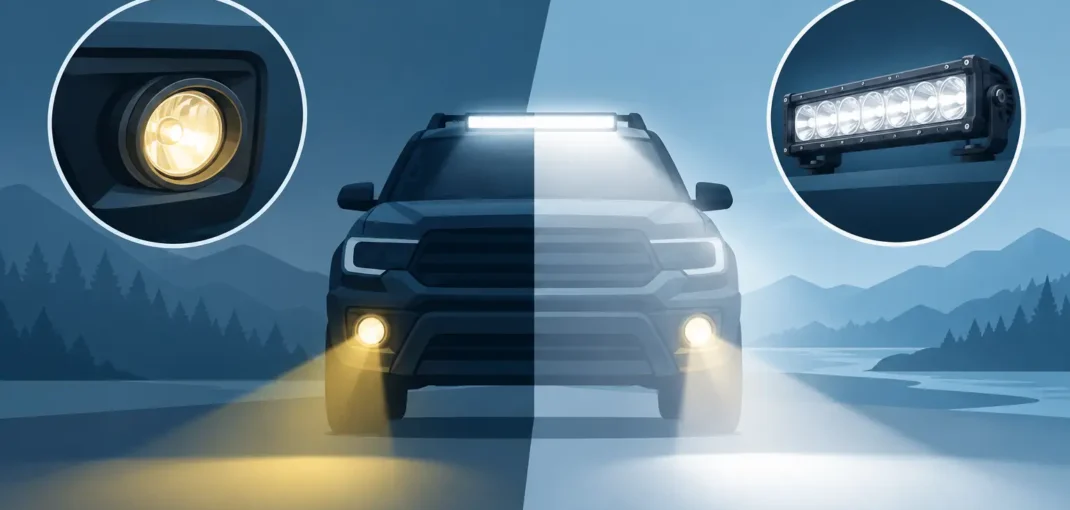
Fog lights are designed to light the road directly in front of your vehicle with a wide, low beam. Their job is not to throw light as far as possible. Instead, they help define lane edges, shoulders, curbs, and obstacles when fog, rain, snow, or dust makes high beams less effective.
A light bar is an auxiliary driving or off-road light that can produce a much larger volume of light. Depending on its optics, a light bar can project a long-distance spot beam, a broad flood beam, or a combination of both. That extra reach is useful on trails, ranch roads, job sites, and other low-light areas where you need to see farther ahead than factory lighting allows.
The key difference is beam placement. Fog lights keep illumination low and wide to reduce reflected glare. Light bars generally aim farther forward and higher, which makes them powerful in clear, dark conditions but often a poor choice in actual fog.
When Fog Lights Are the Better Upgrade
Fog lights make the most sense for daily drivers that regularly deal with bad weather, early commutes, or poorly lit roads. A quality LED fog light upgrade can provide a cleaner white output, a more focused beam, and a refreshed front-end appearance without changing the way your vehicle is used every day.
In dense fog, high-mounted or long-range light can reflect off water droplets and create a bright wall in front of the vehicle. That is why a properly aimed fog light sits low in the bumper and puts light under much of the haze. You may not see dramatically farther down the road, but you can often see the pavement and road boundaries more clearly.
Fog lights are also the cleaner option when your vehicle already has factory fog-light openings. Direct-fit assemblies for a Chevrolet Silverado, GMC Sierra, Ford truck, Tahoe, Yukon, or SUV can replace faded, cracked, or outdated factory units while keeping an OEM-style mounting location. For many owners, that means a more straightforward installation and a finished look that does not require adding brackets to the bumper or grille.
What to Look for in LED Fog Lights
Beam pattern matters more than advertised wattage alone. Look for fog lights built for a low, wide pattern and choose a housing or lens style that matches your truck or SUV. Clear lenses deliver a traditional appearance, while smoked housings can support a blacked-out front-end build. Yellow-selective lighting is also popular for drivers who want better contrast in rain, snow, and dusty conditions.
Fitment should be your first filter. Confirm the model year, trim, bumper style, and whether your vehicle was originally equipped with fog lights. A set that fits a 2014-2018 Silverado may not work with every bumper or trim package in that range.
When a Light Bar Makes More Sense
A light bar is built for drivers who need more usable distance and a wider field of view beyond normal road lighting. If you run trails after sunset, access remote property, tow through dark areas, work around equipment, or travel unlit backroads, an auxiliary light bar can make a major difference.
Spot-pattern sections concentrate light downrange. Flood-pattern sections spread light across a broad area close to the vehicle. Combo light bars use both, making them a practical choice for off-road trucks that need to see trail edges while still gaining distance down the path.
Light bars are available in many sizes, from compact units tucked into a grille opening to wide roof-mounted bars for dedicated off-road builds. A slim LED bar behind the grille can add useful light without changing the vehicle profile much. A larger bumper-mounted or roof-mounted setup delivers more output, but it is more visible, needs more careful aiming, and may create wind noise or glare on the hood.
Light Bar Mounting Changes the Result
Mounting location is not just a styling decision. A low bumper mount can improve foreground and trail illumination while keeping the bar closer to the road surface. A grille-mounted bar can offer a clean, protected installation on many trucks. Roof-mounted bars provide a high, wide view for off-road use, but they can produce hood glare and are usually the least appropriate option for public-road driving.
Measure available space before ordering. Consider the grille design, active shutters, tow hooks, parking sensors, front camera, winch setup, and whether a bracket is vehicle-specific. A light bar that physically fits may still interfere with airflow, sensor operation, or bumper access if the installation is not planned correctly.
Beam Pattern, Color, and Output: Avoid the Spec Sheet Trap
More lumens do not automatically mean better visibility. An overly bright light with poor optics can create hotspots, glare, and eye fatigue. The best lighting setup puts light where you need it rather than simply making the entire area in front of the truck look bright.
For fog lights, prioritize a controlled low beam with usable side coverage. For light bars, choose the pattern around your driving environment. A long spot beam is useful at higher speeds on open terrain. A flood beam is better for slow trail work, campsite setup, loading equipment, or seeing around the sides of the vehicle. A combo pattern is a smart middle ground when your truck does both.
Color temperature also affects how the light feels on the road. Cool white LED lighting gives a modern look and can make reflective signs and trail markers stand out. Yellow or amber lighting may provide better contrast in dust, snow, rain, and haze. Neither color replaces proper aiming, clean lenses, or safe driving speed.
Street Legality and Responsible Use
This is where fog lights and light bars separate quickly. Factory-style fog lights designed for on-road use are generally easier to integrate into a street-driven vehicle, provided they are correctly installed and aimed. State and local rules can still govern the number of auxiliary lights, mounting height, beam color, covers, and when lights may be used.
Most high-output light bars are intended for off-road use. Running an uncovered, powerful light bar on public roads can blind oncoming traffic and may violate local equipment rules. A separate switch, relay, fuse, and wiring harness help you control the system properly. Some drivers wire auxiliary lights to high beams, but that setup still needs to comply with local regulations and should never create glare for other motorists.
Before buying, check your state requirements and the product markings. DOT or SAE markings can matter for road-use lighting applications, while off-road lights may carry different use restrictions. The safest setup is one that gives you the light you need without becoming a problem for everyone else on the road.
Installation and Fitment: Plan Before You Order
Fog lights are often simpler because the mounting points may already exist in the bumper. Even then, inspect the wiring, switch provisions, bezel shape, and connector style. A direct-fit light assembly can save time, but a complete installation may still require a harness, relay, fuse, or switch depending on the vehicle and trim.
Light bars require more planning. You need a secure mount that can handle vibration, a protected wiring route, and enough clearance for hood movement, grille components, and cooling airflow. Use a properly fused circuit and keep wiring away from sharp edges, exhaust heat, suspension movement, and fan components. If you are adding a large bar or several auxiliary lights, confirm that your charging system can support the electrical load.
Aim every added light after installation. Park on level ground facing a wall, set the vehicle at normal ride height, and adjust gradually. Fog lights should remain low and controlled. Light bars should be aimed for the terrain and kept off where road use is not allowed.
Choose the Setup That Matches Your Truck
Choose fog lights if you want a direct-fit replacement, better low-speed visibility in poor weather, and a factory-style upgrade that complements daily driving. Choose a light bar if your truck spends real time off pavement, on private land, at work sites, or on dark trails where long-range and wide-area lighting matter most.
Many truck owners benefit from both: vehicle-specific LED fog lights for poor weather and a separately switched light bar for off-road or work use. Start by selecting your vehicle, verify the bumper and trim application, then match the light to the conditions you actually drive in. Car and Truck Zone makes that process easier with fitment-focused lighting options built around the trucks and SUVs you own.
The right light should earn its place on your vehicle every time the road disappears, the weather turns, or the workday runs past sunset.