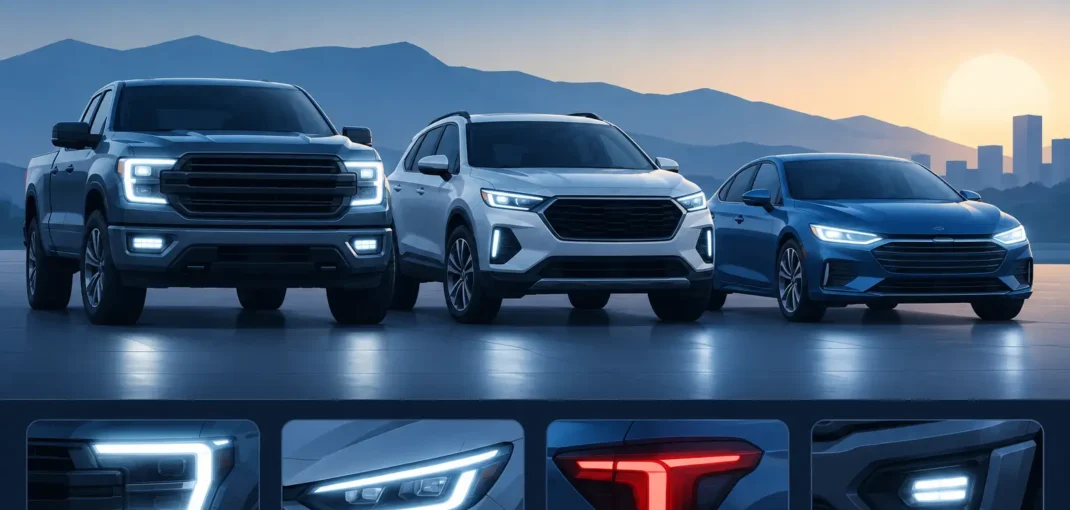
Factory halogen lights can make an otherwise clean truck or SUV look dated fast. They can also leave a lot to be desired on dark back roads, in bad weather, or during early morning commutes. The biggest LED lighting trends are moving beyond a simple bulb swap and toward vehicle-specific upgrades that improve visibility, refresh the front or rear end, and keep the installation process straightforward.
For truck owners, the right lighting upgrade can do double duty. A set of LED headlights can modernize the look of a Silverado or F-150 while helping you see more clearly at night. Smoked LED taillights, cab roof lights, and LED fog lights can add a more aggressive build style without changing the vehicle’s core character. The key is choosing parts designed for your exact year, make, and model.
LED Lighting Trends That Matter for Vehicle Owners
The most useful trend is not a flashy feature. It is fitment-first lighting. Owners are looking for headlights, taillights, third brake lights, and fog lights built around factory mounting points and connector locations. Direct-fit assemblies reduce guesswork, preserve a clean appearance, and are usually a better choice than trying to force universal parts into place.
Full LED replacement assemblies are also becoming more popular than LED conversion bulbs alone. A quality LED headlight assembly is designed as a complete unit, with the housing, reflector or projector, lenses, and LED output working together. That matters because installing a bright bulb in a housing that was not designed for it can create uneven output or glare for oncoming traffic.
For replacement lighting, LED technology gives owners a practical reason to upgrade even when they are not building a show truck. LEDs generally illuminate quickly, use less power than traditional incandescent bulbs, and can provide a crisp, modern look. Results still depend on the specific assembly, lens design, aiming, and installation quality.
Projector Headlights Keep the Modern Look Focused
Projector-style LED headlights remain a strong choice for drivers who want a sharper front-end update. Their focused beam pattern can help deliver controlled output when the assembly is correctly designed and aimed. Black housing, chrome housing, clear lens, and smoked-lens options give owners room to match a factory-style restoration, a blacked-out build, or a more customized appearance.
Appearance should not be the only factor. A smoked lens may suit a dark grille and black wheels, but it can reduce the visible brightness compared with a clear-lens option depending on the design. Drivers who spend a lot of time on unlit roads may prioritize maximum usable light over a darker finish.
LED Taillights Are Becoming a Rear-End Upgrade
LED taillights are one of the fastest ways to update the rear of an older pickup, SUV, or Mustang. Modern assemblies often use defined light bars, bright brake-light sections, and cleaner turn signal patterns that look more current than faded factory housings. They are especially popular when the original lenses are cracked, cloudy, leaking, or showing moisture inside the housing.
The best choice depends on the job. If you need a direct replacement after damage, a clean factory-style LED assembly may be the right move. If you are changing the look of a truck with a black grille, dark wheels, and tinted glass, smoked or black-housing taillights can carry that style to the rear. Always confirm that the lighting functions, connectors, and mounting configuration match your vehicle.
More Purpose-Built Lighting for Trucks
Truck lighting is becoming more specific to how people actually use their vehicles. Instead of adding light everywhere, owners are selecting focused upgrades for towing, work sites, off-road travel, bed access, and poor-weather driving.
LED fog lights are a practical example. A properly selected fog light can add low, wide illumination that supports the headlights in rain, fog, snow, or on dark shoulders. It is not a replacement for correctly aimed headlights, and brighter is not always better. The goal is useful forward and side visibility without creating excessive glare.
Cab roof marker lights remain a popular visual upgrade for heavy-duty trucks and certain pickup builds. They add classic big-rig styling, but installation can require drilling, wiring, and sealing the roof correctly. This is a project where vehicle application and installation confidence matter. A poor seal can lead to water intrusion, so owners who are not comfortable with the process may want professional installation.
LED light bars and auxiliary lights continue to have a place, especially for off-road and work applications. They can provide significant output, but placement, wiring, beam pattern, and local regulations all deserve attention. A light bar that works well on a trail or private property may not be suitable for on-road use. Use switches, relays, and mounting hardware made for the application, and avoid blocking airflow, sensors, cameras, or the grille.
Styling Trends Are Cleaner and More Vehicle-Specific
The aftermarket is moving away from one-size-fits-all lighting looks. Owners want upgrades that appear like they belong on the vehicle, even when the style is far more aggressive than factory equipment.
Black housings remain a leading choice for trucks, SUVs, and performance cars. They pair naturally with black grilles, color-matched bumpers, dark wheels, and smoked side markers. Chrome housings still make sense for owners restoring an older vehicle or keeping a bright factory-inspired appearance. Neither is automatically better. The right finish depends on the vehicle’s existing trim and how much contrast you want in the front end.
Sequential turn signals and LED daytime running light signatures are also showing up more often in replacement headlight and taillight assemblies. These features can create a more premium look, but fitment and function come first. Make sure the assembly is designed for your model year and that it will work correctly with the vehicle’s wiring system. Some applications may need resistors, a load equalizer, or other components to prevent hyperflashing or warning messages.
What to Check Before Buying LED Lighting
Before selecting an upgrade, start with the vehicle details: year, make, model, trim, and body style. A Silverado 1500 and Silverado HD can use different lighting parts, even when they look similar. The same goes for SUV models with multiple facelifts across a generation.
For a smarter purchase, check these four details before adding lighting to the cart:
- Confirm the exact vehicle application and model-year range listed for the part.
- Check whether the item is a complete assembly, a bulb conversion, or an auxiliary light.
- Review the housing color, lens color, and light functions so the style matches your build.
- Verify whether the lights are intended for road use, off-road use, or a specific installation location.
Also consider what you are replacing. If your headlight housings are hazy and the mounting tabs are broken, a complete LED headlight assembly may offer more value than polishing the lens and installing new bulbs. If the housing is in good condition and your goal is simply a small brightness update, an LED bulb option may be enough, provided it produces a proper beam pattern in the original housing.
Installation and Aiming Still Matter
Even the right LED assembly will underperform if it is not installed securely or aimed correctly. Before removing the old lighting, inspect connectors for corrosion, check for damaged wiring, and compare the new part with the factory unit. After installation, test low beams, high beams, parking lights, turn signals, brake lights, reverse lights, and any daytime running light functions before putting everything back together.
Headlight aim is especially important. Lights aimed too high can reduce useful road visibility and distract other drivers. Lights aimed too low can leave distance visibility on the table. Follow the vehicle and light manufacturer’s instructions, use a level surface, and take the time to make final adjustments.
Car and Truck Zone makes it easier to shop these upgrades by starting with vehicle fitment, then narrowing options by lighting type, application, and finish. Select your vehicle before choosing a style, and you can build toward better nighttime visibility without losing sight of the details that make a part fit right.
The best lighting upgrade is the one that suits how you drive, matches the look you want, and installs correctly on your vehicle. Start with fitment, choose a design with a clear purpose, and let the finished result make every night drive look and feel more capable.