A headlight upgrade can change more than the look of your truck or car. It affects how confidently you see a dark back road, how quickly your lights respond in bad weather, and whether the new setup works correctly with your factory housings. When comparing LED versus HID headlights, the better choice depends on your vehicle, housing design, driving habits, and the type of upgrade you want.
Both lighting technologies can outperform worn-out halogen bulbs. But LED and HID systems create light differently, install differently, and behave differently on the road. The right answer is not always the brightest option on the box.
LED Versus HID Headlights: The Main Difference
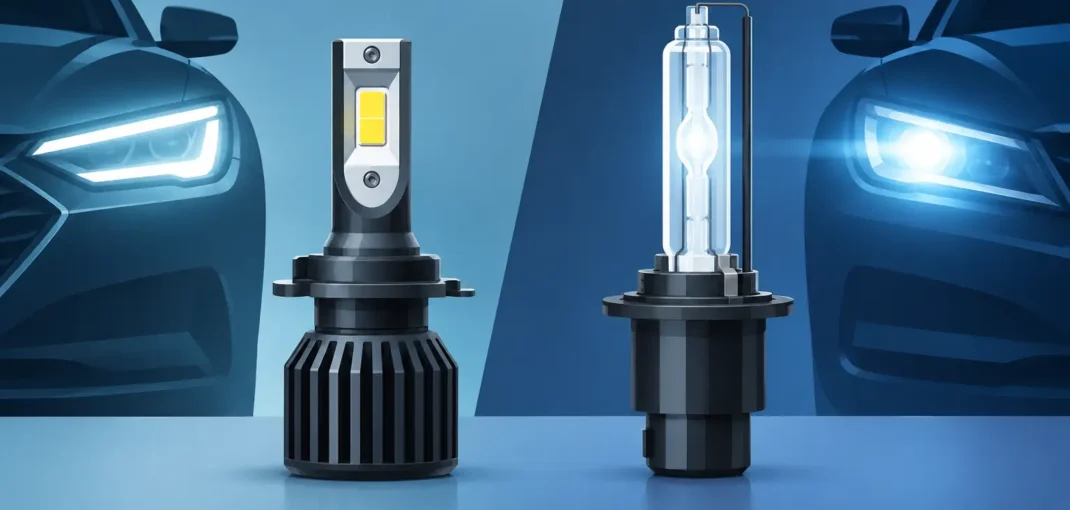
LED headlights use light-emitting diodes to produce light electronically. They reach full output almost instantly, draw relatively little power, and typically have a long service life. Most current aftermarket headlight assemblies use LEDs because they support modern styling, crisp light output, and compact packaging.
HID headlights, also called xenon headlights, create light through an electrical arc inside a gas-filled bulb. They require a ballast to start and regulate the system. An HID bulb generally takes a few seconds to warm up, then reaches a strong, wide output that made HID conversions popular long before LEDs became common.
For a direct-fit replacement assembly on a Silverado, Sierra, Mustang, Tahoe, F-150, or similar vehicle, LED is usually the more straightforward path. For certain projector-based setups, an HID system can still be a strong performer when every component is matched correctly.
Brightness Is Not the Whole Story
Raw lumen numbers do not tell you exactly how useful a headlight will be. Beam pattern, projector design, reflector shape, bulb position, and aiming all decide where the light goes. A high-output bulb in the wrong housing can create glare for oncoming traffic while giving the driver less usable distance down the road.
Quality LED headlights provide an immediate, clean beam with sharp cutoff control in a properly designed projector assembly. They are especially appealing for drivers who want a modern white-light appearance along with reliable daily use. LED assemblies can also integrate daytime running lights, sequential turn signals, smoked lenses, black housings, and other style upgrades without adding separate lighting components.
A quality HID setup can produce excellent road coverage, particularly in a projector designed for HID bulbs. Once warmed up, HIDs often deliver a smooth, intense field of light. However, a poorly matched HID kit installed in a halogen reflector housing may scatter light instead of controlling it. That is a visibility problem and a courtesy problem for everyone sharing the road.
Startup Time and Everyday Driving
LED headlights turn on at full brightness immediately. That matters when you flash high beams, use automatic headlights, or drive through frequent tunnels, storms, and early-morning conditions. LEDs also work well for instant-on functions such as brake lights, turn signals, marker lights, and cab roof lights.
HID bulbs need a warm-up period. They light quickly, but they do not reach full brightness right away. That delay is usually minor during normal nighttime driving, yet it can be noticeable if you regularly switch headlights on and off or need high beams to respond immediately.
For a daily-driven pickup, SUV, or commuter car, the instant response of LEDs is hard to overlook. If the vehicle sees mostly long nighttime highway runs, HID warm-up time may be less of a deciding factor.
Lifespan, Heat, and Power Draw
LEDs are known for long operating life, but that depends heavily on heat management. Every LED headlight has a heat sink, fan, or other cooling design that protects the diodes and driver electronics. A well-built LED assembly can provide years of dependable service. A low-quality LED bulb with weak cooling may dim early, flicker, or fail despite its advertised lifespan.
HID bulbs generally last longer than halogen bulbs but usually not as long as a quality LED system. Their ballasts add another component that can eventually fail. HID bulbs can also shift in color and lose output as they age, so replacing bulbs as a pair is a smart move when one begins to fade.
LED systems usually draw less power than HID systems after startup. That can be helpful on vehicles with added electrical accessories such as light bars, auxiliary fog lights, bed lighting, trailer wiring, or cab marker lights. Still, lower power draw does not eliminate the need for correct wiring, connectors, and fuse protection.
Fitment Comes Before Color Temperature
Before choosing LED or HID, confirm how your vehicle is built. A bulb replacement is not the same as a complete headlight assembly. Your vehicle may use a reflector housing, projector housing, sealed beam, factory HID system, or a combination of separate low- and high-beam bulbs. Some newer vehicles also use computer-controlled lighting that can trigger warning messages when the electrical load changes.
Vehicle-specific assemblies are often the cleanest upgrade because the housing, mounting points, lens shape, and lighting layout are built for the application. Select your year, make, and model first, then check trim level, body style, and factory headlight configuration. A 2014 Silverado and a 2015 Silverado, for example, may look similar at a glance but use different front-end components depending on the generation and trim.
If you are installing LED replacement bulbs, check bulb size, available space behind the dust cap, fan clearance, and connector orientation. Some applications need an anti-flicker harness, load resistor, or decoder to prevent flickering and dashboard warnings. HID kits need adequate room for ballasts, secure mounting, protected wiring, and a housing that can manage the beam pattern properly.
Choose the Right Light Color
Color temperature is measured in Kelvin. Lower Kelvin ratings create a warmer yellow-white light, while higher ratings look cooler and bluer. Many drivers prefer a neutral or cool white appearance around 5000K to 6000K because it looks current and provides clear contrast without pushing too far into blue.
Going excessively blue may look customized, but it does not automatically improve nighttime visibility. In rain, fog, snow, or wet pavement, an overly cool light can create more reflected glare and make contrast harder to read. If function is the priority, choose a practical white output rather than selecting color for appearance alone.
Installation and Aiming Matter
A direct-fit headlight assembly can be a manageable weekend project for many DIY owners. Even so, take time to inspect connectors, seals, mounting tabs, and adjustment points before putting the front end back together. Keep wiring away from sharp edges and moving parts, and make sure every dust cap and weather seal is fully seated.
After any headlight replacement, aim the lights. Park on level ground facing a wall, follow the vehicle’s specified aiming procedure, and verify that both beams sit at the correct height. Aiming is not an optional finishing touch. It is what turns a new lighting upgrade into usable forward visibility instead of scattered glare.
Also check local and federal lighting requirements before modifying a factory system. Lens tint, bulb color, beam pattern, and aftermarket conversion kits can affect road legality. A clean-looking setup should still put controlled light where it belongs.
When LED Makes the Most Sense
LED is usually the better fit for drivers who want a modern replacement, instant output, lower power draw, and styling options in one package. It is especially practical for complete aftermarket headlight assemblies and for owners refreshing an older truck with black-housing, clear-lens, or LED daytime running light styling.
LED also makes sense when the vehicle is used daily, when you run several electrical accessories, or when you want fewer external components than an HID conversion. For most shoppers replacing factory headlights or upgrading a truck’s front-end appearance, a vehicle-specific LED assembly is the easier choice to shop and install.
When HID Still Has a Place
HID remains a worthwhile option for projector housings designed around HID technology or for drivers who already have a properly working factory HID system. Replacing aging OEM HID bulbs and worn components can restore excellent nighttime performance without changing the vehicle’s original lighting design.
The key is using compatible parts, not forcing an HID kit into a housing that was never designed for it. If your goal is maximum usable road light from a projector setup, a properly engineered HID system can still deliver impressive results.
Start with the housing your vehicle uses, not the bulb technology you prefer. Once fitment, beam control, and legal operation are covered, you can choose the light output and style that makes every night drive feel more confident.