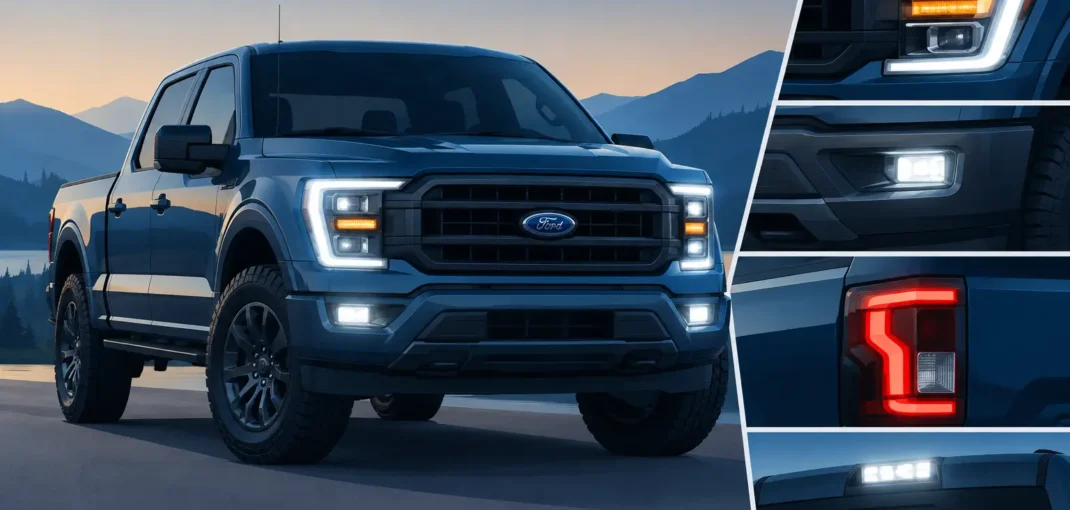
A faded factory headlight can make an otherwise clean Ford look older than it is. A cracked taillight, weak fog lamp, or dated amber cab light does the same. These Ford truck lighting upgrade examples show practical ways to improve nighttime visibility, refresh exterior style, and replace worn lighting with vehicle-specific parts that match your build.
Ford Truck Lighting Upgrade Examples for Every Build
The right upgrade depends on how you use your truck. A daily-driven F-150 may need brighter headlights and a fresh set of LED taillights. A work-ready Super Duty may benefit more from fog lights, cab roof lights, and additional rear visibility. Start with the lighting area that is damaged, outdated, or not doing enough for your driving conditions.
LED Headlights for a Modern Front End
Headlight assemblies are one of the most noticeable upgrades on a Ford truck. Replacing cloudy, moisture-filled, or yellowed factory housings with LED-style headlights can clean up the front end while improving the quality of light on the road.
For a late-model F-150, black housing headlights with clear lenses are a popular choice for a sharper, more aggressive appearance. Chrome housings are often a better match for trucks that retain a factory-style grille and bright trim. On older Ford trucks, a new pair of replacement headlights can make a major difference without changing the truck’s original character.
Look for assemblies designed for your exact year, model, and trim application. Headlight mounting points, bulb connections, daytime running light features, and factory leveling provisions can vary between model years. A direct-fit assembly keeps the project focused on installation instead of modification.
LED Taillights That Refresh the Rear View
Taillights take constant abuse from weather, trailer hookups, loading gear, and everyday road debris. If the lenses are cracked or faded, replacement is about more than appearance. Clear, functioning brake lights and turn signals are basic safety equipment.
LED taillight assemblies are a common Ford F-150 and Super Duty upgrade because they provide a more current look than older incandescent-style units. Smoked lenses with black housings work well on blacked-out builds, especially when paired with a dark grille, wheels, and side steps. Red clear-lens options are a safer choice for owners who want a clean factory-plus look.
Before selecting a taillight set, confirm whether your truck uses standard bulbs, factory LEDs, blind-spot monitoring, or a specific connector style. A taillight that looks right still needs to match your truck’s electrical and mounting configuration.
Fog Lights for Low-Visibility Driving
Fog lights are a practical upgrade for Ford owners who drive through rain, fog, snow, rural roads, or poorly lit job sites. They sit lower than the headlights and can add useful foreground illumination when aimed correctly.
An F-150 with blank factory fog-light openings is a strong candidate for a complete fog-light kit. If your truck already has factory fog lights but the lenses are damaged or the output feels weak, replacement LED fog lights offer a straightforward refresh. The best result comes from choosing a kit made for the bumper style on your truck, not a universal lamp that requires custom brackets.
Keep the beam pattern in mind. More brightness is not always better if the lights create glare or are pointed too high. Properly aimed fog lights should help you see the road edge and immediate path ahead without distracting oncoming traffic.
Cab Roof Lights for Super Duty Style and Utility
Cab roof marker lights are a classic Super Duty upgrade. They give F-250, F-350, and F-450 trucks a heavy-duty look while making the cab more visible from the front and rear. Amber LED cab lights with clear or smoked lenses can complement a truck’s overall color and trim package.
This upgrade has a trade-off: installation typically requires drilling into the cab roof and routing wiring carefully. It is a worthwhile project for owners who want that factory-style heavy-duty appearance, but it is not a quick swap like changing a taillight assembly. Use vehicle-specific placement guidance, seal every mounting point correctly, and avoid pinching wires under the headliner.
For a simpler visual upgrade, side marker lights and third brake lights can deliver a similar LED refresh with less involved installation.
Third Brake Lights and Bed Lighting
The third brake light is often overlooked until it leaks, cracks, or develops failed LEDs. A replacement third brake light with cargo lamps improves the rear cab appearance and can make loading tools, camping gear, or equipment after dark easier.
Smoked third brake lights are popular on dark-color Ford trucks, while clear-lens versions keep the look closer to stock. If your truck is used for towing, hauling, or work, prioritize a bright brake-light section and reliable cargo illumination over the darkest possible lens style.
Bed lighting is another useful addition for trucks that see real use after sunset. LED bed lights can make it easier to find straps, toolboxes, recovery gear, and smaller cargo without relying on a handheld flashlight. Plan the switch location and wire routing before starting so the finished installation looks clean and stays protected from moisture.
Light Bars for Work Areas and Off-Road Use
A light bar can add wide-area illumination for trails, farms, worksites, and remote access roads. Bumper-mounted bars offer a clean, low-profile setup, while grille-mounted options can keep the front end looking more integrated. Smaller pods may be enough for ditch-light positions or targeted side visibility.
This is one area where local rules matter. Auxiliary lights may need covers on public roads, and high-output bars should not be used around normal traffic. Wire the system with a proper relay, fuse, and switch rather than tapping into a circuit that was not designed for the added load.
For many daily drivers, fog lights and quality headlights offer more usable road-going improvement than a large light bar. Choose the setup that matches how the truck actually gets used.
How to Choose the Right Ford Truck Lighting Upgrade
Start by selecting your vehicle year, make, model, and body configuration. F-150, F-250, F-350, Ranger, Maverick, and older Ford truck applications can use different housings, connectors, bumper openings, and mounting hardware. Fitment is the first filter, not the last detail.
Then decide whether your priority is replacement, appearance, or added utility. A direct-fit headlight or taillight assembly is ideal when factory parts are damaged. Smoked LEDs and black housings make sense when styling is the goal. Fog lights, cargo lamps, cab lights, and auxiliary lighting serve specific visibility needs.
Check the product details for included bulbs, wiring harnesses, resistors, installation hardware, and any features that may require additional setup. LED conversions can occasionally cause hyperflash or dashboard warnings on certain applications if the truck’s system does not recognize the lower power draw. Vehicle-specific products reduce those issues, but it is still smart to verify what is included before ordering.
Build a Lighting Package That Looks Intentional
The best Ford lighting upgrades usually work as a package, not as a random collection of parts. Black headlights, smoked taillights, and a matching third brake light can tie together a dark-trim street truck. Clear-lens headlights, bright red taillights, and functional fog lights suit a clean OEM-style restoration. Super Duty owners can add amber cab lights and cargo lighting for a more work-ready finish.
Avoid mixing too many lens colors and housing finishes unless that contrast is part of the plan. Matching the lighting to your grille, wheels, badges, and bumper trim gives the truck a finished look.
Car and Truck Zone makes it easier to shop by vehicle fitment, so you can focus on lighting that belongs on your Ford instead of sorting through universal parts. Pick the upgrade that solves the problem in front of you, install it carefully, and let every nighttime drive show the difference.